



Fund transparency should become a key part of the asset class as it continues its maturation.
It’s no secret alternative assets are among the most expensive investment strategies. Of course, private credit, private equity and the like require a much more staffing-intensive effort than passive investment vehicles may need, and there’s the potential for outsized returns within private markets.
None of this, however, dents investor demand for transparency around fees and expenses, a cause that has been championed by the International Limited Partner Association for some time. This has resulted in a reporting template that has many supporters among LPs, including the California Public Employees’ Retirement Association and the Canada Pension Plan Investment Board.
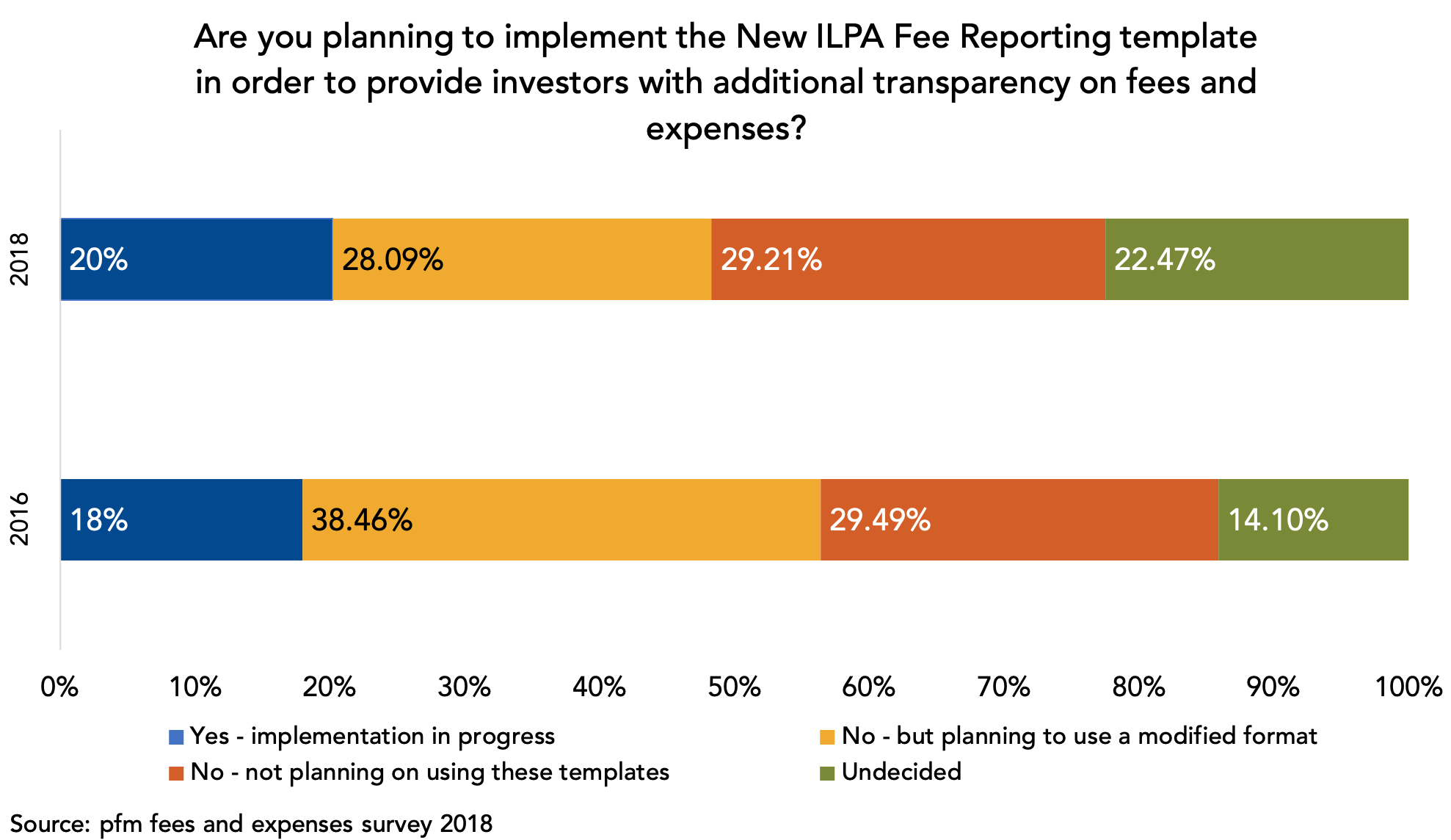
A recent survey by Private Debt Investor sister publication pfm showed almost half of general partner respondents – many of which run equity-based strategies – were either undecided or planned not to implement additional fees and expenses reporting for greater transparency.
An ILPA presentation from August noted the level of expense charged through to a fund has increased. This can impact LP multiples and GP-LP alignment can be “compromised”, the presentation explained. As fees increase, so does the need for concise, unambiguous reporting.
Beyond the additional transparency, adopting a standard reporting template – including any necessary technology to go along with it – would be a boon for investors, multiple LPs have told PDI. An investment official at one public pension plan said the retirement plan outsources the tracking of its GP commitments, while a European LP said it would be beneficial for a computer language to be standardized.
In a separate survey question on adopted ILPA practices, 31 percent of respondents said they are using a modified format of the template that fits investor needs. Certainly, GPs that are flexible build goodwill with their investors, but if each GP approaches it even slightly differently or uses different software, the standardisation still falls short.







Private Credit Defaults 101: Back to School
As Labor Day approaches, the unofficial end of summer is upon us. But, before we get too sad, there is also the familiar back-to-school energy.