



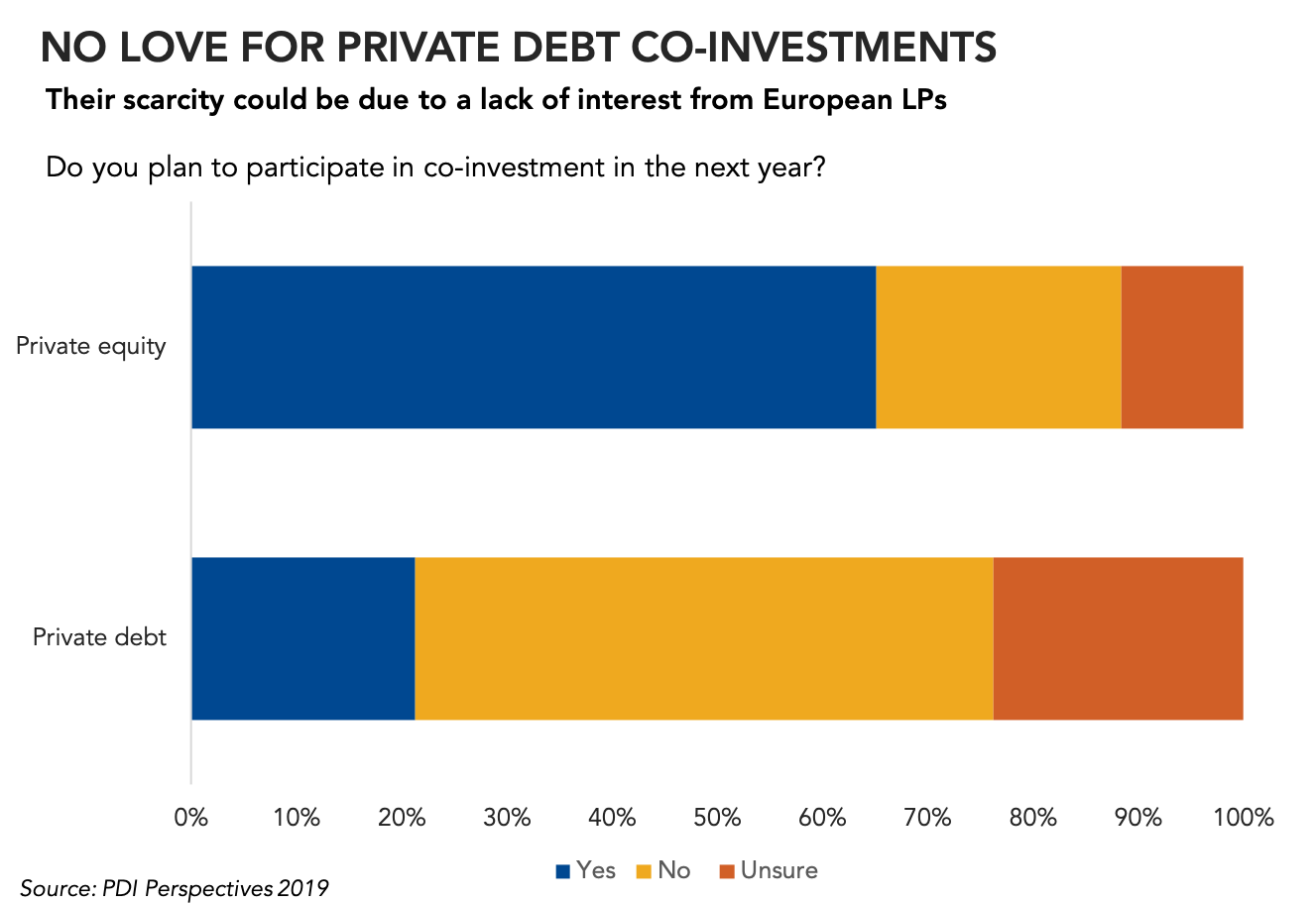
While private equity co-investments are broadly popular, such positions in private debt remain relatively rare, though they show room for growth.
Co-investments are not quite the norm in private credit, but they represent a possible area of expansion if interest can reach even a fraction of that illustrated by limited partners in private equity co-investments.
Some 55 percent of investors surveyed as part of our PDI Perspectives 2019 said they had no plans this year to do private debt co-investments, which are becoming more common in the US but remain rare in Europe. For private equity though, 65.1 percent of investors in the same poll said that they plan to participate in co-investments.
At October’s PDI Capital Structure Forum in London, one of the attendees said the quick turnaround time required for co-investments is problematic for European investors, noting that, because of the continent’s competitive market, it is difficult to guarantee deal terms for LPs.
Private equity co-investments, though, had a solid majority of poll respondents – which included institutional investors based around the globe – anticipating taking such positions. To reach that level of interest, obviously European investors must participate in the opportunity.
It shows that European LPs have the appetite for co-investments. Credit managers that can figure out a way to offer co-investments to LPs can provide that as an additional incentive – rather than just a commingled fund commitment – to invest with that firm, which is another way for the asset class to continue its growth.







Private Credit Defaults 101: Back to School
As Labor Day approaches, the unofficial end of summer is upon us. But, before we get too sad, there is also the familiar back-to-school energy.