



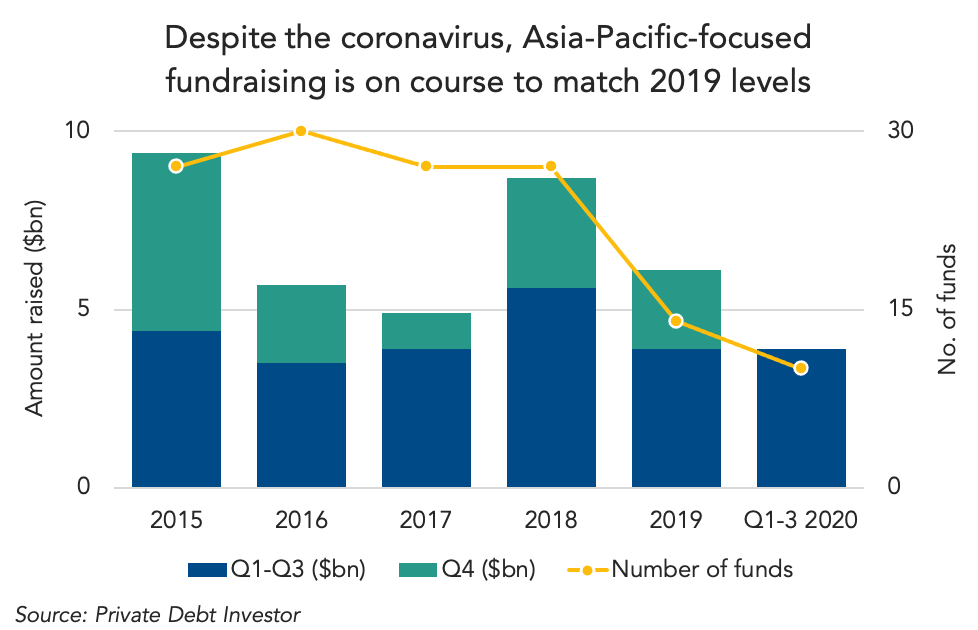
Asia-Pacific has many attributes which should make investors sit up and take notice.
In our recently published Asia-Pacific Report, PDI examined prospects for private debt in the region. As can be seen from the chart above, fundraising has held up well even amid the turbulence of 2020. So what is driving investor interest? Here are some of the key reasons:
1. Private debt remains under-served: The combination of higher levels of growth and lower leverage multiples than mature markets like the US or Europe makes the Asian market an attractive prospect for private debt. An added bonus is that it is a less competitive credit market, which translates into less pressure on pricing.
2. The market is moving beyond distressed debt: There is something of a misconception that the Asian private credit market is just about distressed debt. Although much of the capital in Asia raised over the past decade has been targeted towards the more challenged end of the credit spectrum, there is a discernible trend towards lending to growing businesses.
3. SMEs are crying out for capital: Small and medium-sized enterprises remain the lifeblood of Asia-Pacific’s economies and were crying out for finance even before covid-19 hit. While bank lending is dominant in the region, accounting for around 91 percent of all loans there, only about 20 percent of loans are disbursed to SMEs. This is despite SMEs accounting for around 40-60 percent of GDP. This suggests an opening for private debt.
4. India is emerging as a major market: The two biggest funds in market – Edelweiss’ Special Opportunity Fund III and the India Resurgence Fund – are based in India. Both have $1 billion targets. Typically for Indian vehicles they are both focused on distressed debt, but investors are also enthusing about infrastructure opportunities in the world’s largest democracy.
5. Infrastructure has a huge funding gap: According to the Asian Development Bank, the region faces a financing gap of more than $1 trillion a year as it attempts to fund a range of core infrastructure projects. That is driving a vibrant mid-cap sector that requires growth funding.




Latest news

US Leveraged Loan Launches Exceed $30b in post-Labor Day Rush
The US leveraged loan market recorded $24.6b of new launches on Tuesday, September 8, marking the busiest post-Labor Day surge…


PE fund distribution rates
Following 2021, buyout distribution rates have fallen to roughly 10% to 15% below the 25-year average.