



Lending to the oil and gas upstream sector at US$17.3bn is down 78% so far this year from the total logged in 2019. With most of the lending to this sector coming from banks through reserve-based revolvers, many issuers have seen the availability tighten under these credit lines, as the value of reserves, which are tied to oil and gas prices have been on the decline.
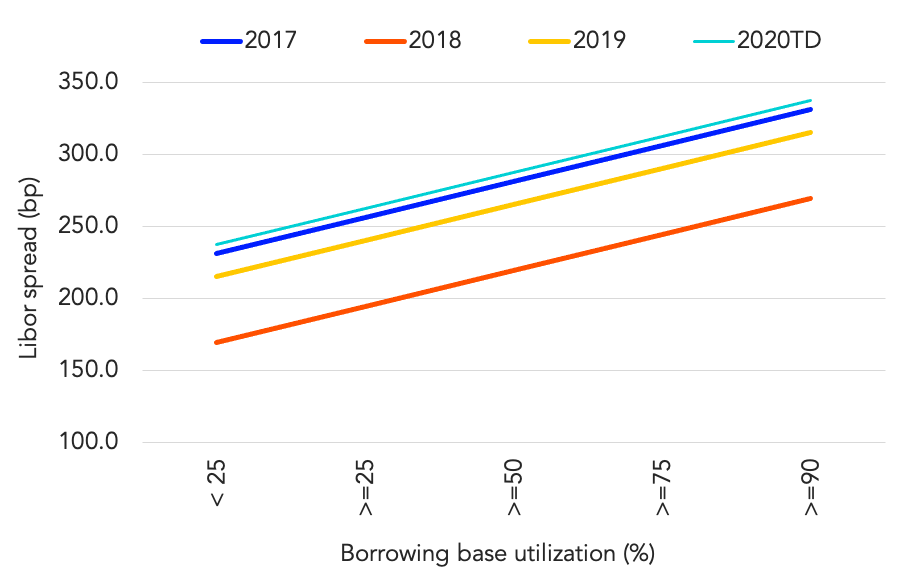
Not only have borrowers seen reduced availability under their credit lines, they have also been subject to higher pricing as they have fallen under a higher level in the pricing grid. Typically pricing on reserve-based revolvers for exploration and production companies is tied to borrowing base utilization; the higher the utilization, the more they pay.
And even without getting bumped to a higher level, average pricing has increased for all levels of borrowing base usage this year; a trend that began in 2019. Pricing has jumped an average of 32% for all usage levels since 2018 to a range of 237.5bp-337.5bp so far in 2020; surpassing 2017’s levels.




Latest news


PE fund distribution rates
Following 2021, buyout distribution rates have fallen to roughly 10% to 15% below the 25-year average.

Sub line pricing flattens
A report on the topic also finds that investors are less concerned by leverage in NAV loans. Pricing for subscription…