



Source: Markit, BofA US HY Index
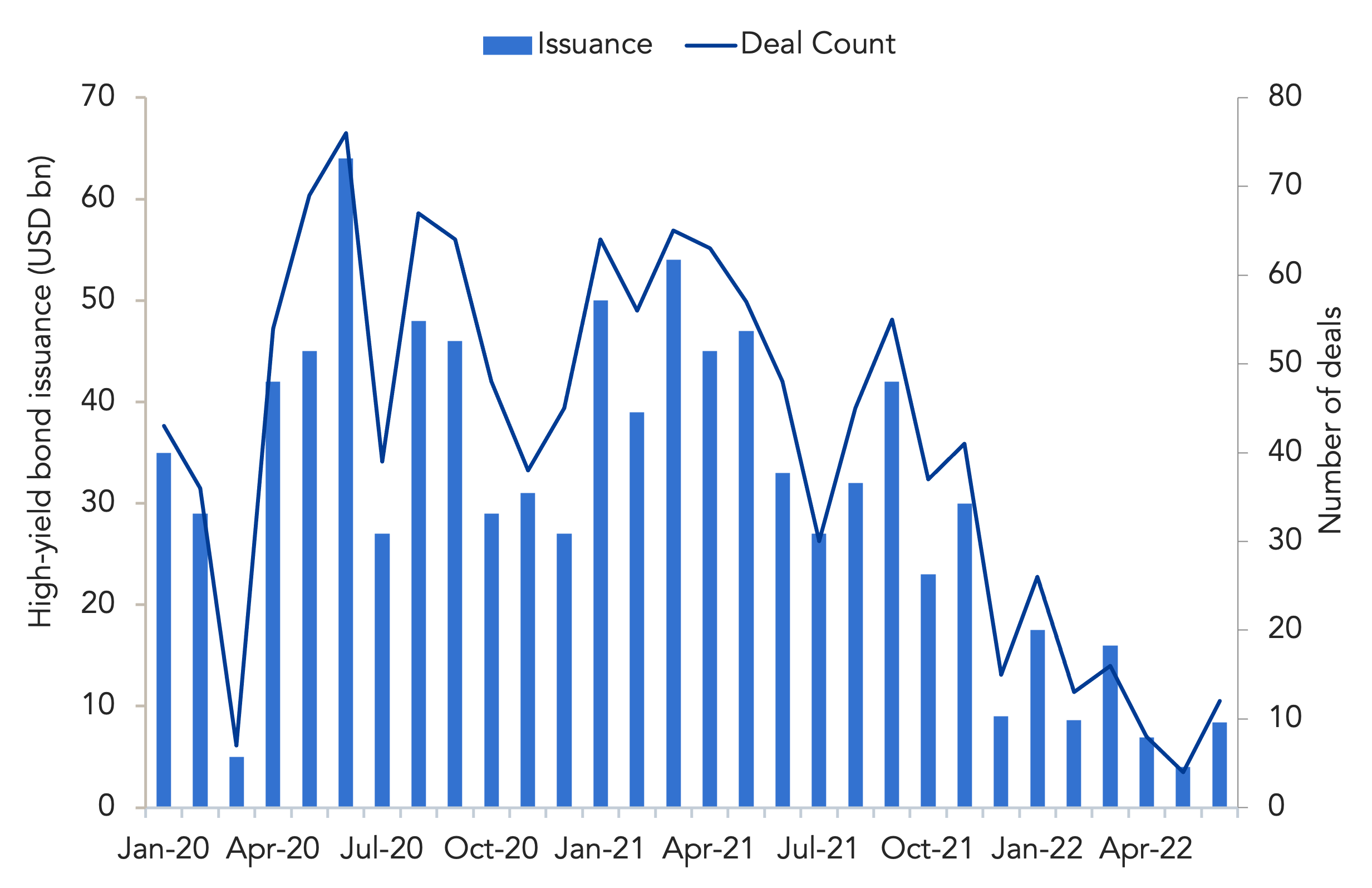
As equity markets plunged into free-fall at the start of May, high-yield (HY) bond issuance came to a shuddering halt. The whirlwind of macroeconomic headwinds buffeting financial markets appeared set to remain, causing panic among investors. With inflation remaining stubbornly high, more aggressive interest-rate hikes expected from the Fed, and disappointing earnings data pouring in from retailers amid rising consumer prices, the challenges abound. Up until the final day of the month, only two borrowers were brave enough to attempt new issuance, with Frontier Communications and Carnival Corp pricing USD 1.2bn and USD 1bn of paper, respectively.
With market conditions improving towards the end of May, borrowers have been taking advantage of the relative calm to issue new HY debt. Darling Ingredients and EQM Midstream have been among the first to test the waters, successfully pricing a USD 750m unsecured note due 2030 for general corporate purposes (GCP), and USD 1bn of dual-tranche financing to support refinancing efforts. Since then, 12 additional issuers have been able to access the HY market, including a USD 2bn secured note for refinancing at Tenet Healthcare.
Thus far in June, issuers have secured USD 8.4bn of HY funding versus only USD 4bn in all of May – the lowest such issuance figure since March 2020, when the coronavirus (COVID-19) pandemic shut down financial markets. Some issuers have had to pay up to access the market. Most recently, Intertape Polymer Group priced the USD 400m unsecured notes supporting its buyout by Clearlake Capital Group at a coupon of 10% and discount of 82 for an implied yield of 14.36%.
(Past performance is no guarantee of future results.)




Latest news

US leveraged loans returns turn negative in October
The Bloomberg US Leveraged Loan Index (Ticker: LOAN) has returned -0.26% this month through October 21, reducing its year-to-date return…

M&A activity begins to tick upward
In the third quarter of 2026, acquisition-linked loan volume across North America and Europe reached about $47 billion, up from $30.6 billion in Q2 and $29.5 billion a year ago.
