
Click here to learn more.
Join Fitch for the upcoming Outlook panel: 2026 Leveraged Finance Credit Outlook Webinar
Signs of emerging bubbles have increased in 2025 amid robust investor risk appetite, high market valuations, a rush of capex in AI-related industries and continued growth in private lending channels. The dichotomy between the favorable funding and liquidity environment and a lackluster macro-economic outlook underscores that there may be growing asset bubble risks.
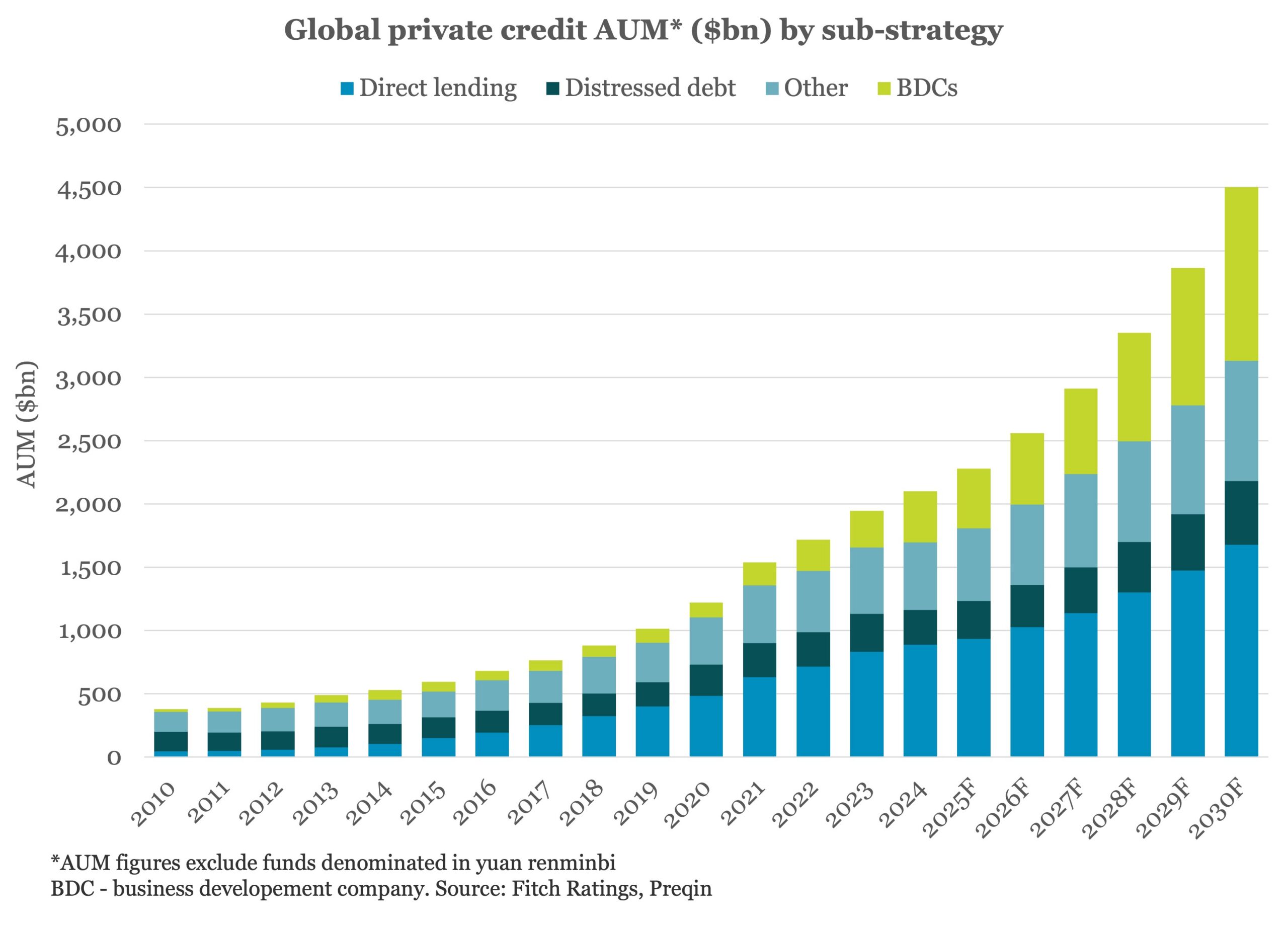
Fitch has long maintained that private credit by itself does not pose a systemic risk to the financial system and the asset class is not in a bubble, even with its high, sustained growth over the past decade and with some bubble-like attributes emerging. Global private credit assets under management (AUM) totaled USD2.1 trillion as of end-2024, according to Preqin; this remains small compared to the financial system as a whole.
That said, the private credit universe is growing in reach and complexity and, given its relative opacity, an exogenous shock could reveal transmission channels that could amplify the shock and lead to wider-ranging negative effects on both borrowers and lenders. Pension and sovereign wealth funds, insurance companies, endowments, high net-worth individuals, banks and even retail investors could be affected.

Latest news

US leveraged loan launches reach five-month high in September
The US leveraged loan market recorded $93.6b of launches in September, marking the busiest month of primary market activity since…

Information technology topped nonaccruals on a cost basis
The information technology sector moved from second place in the first quarter to the top of the list in the second quarter