
Making sure investors find the asset class a good place to find value can help it maintain its rapid growth.
Private equity has mushroomed post-global financial crisis, but is it too expensive? That may be the prevailing sentiment according to limited partners surveyed by Private Debt Investor.
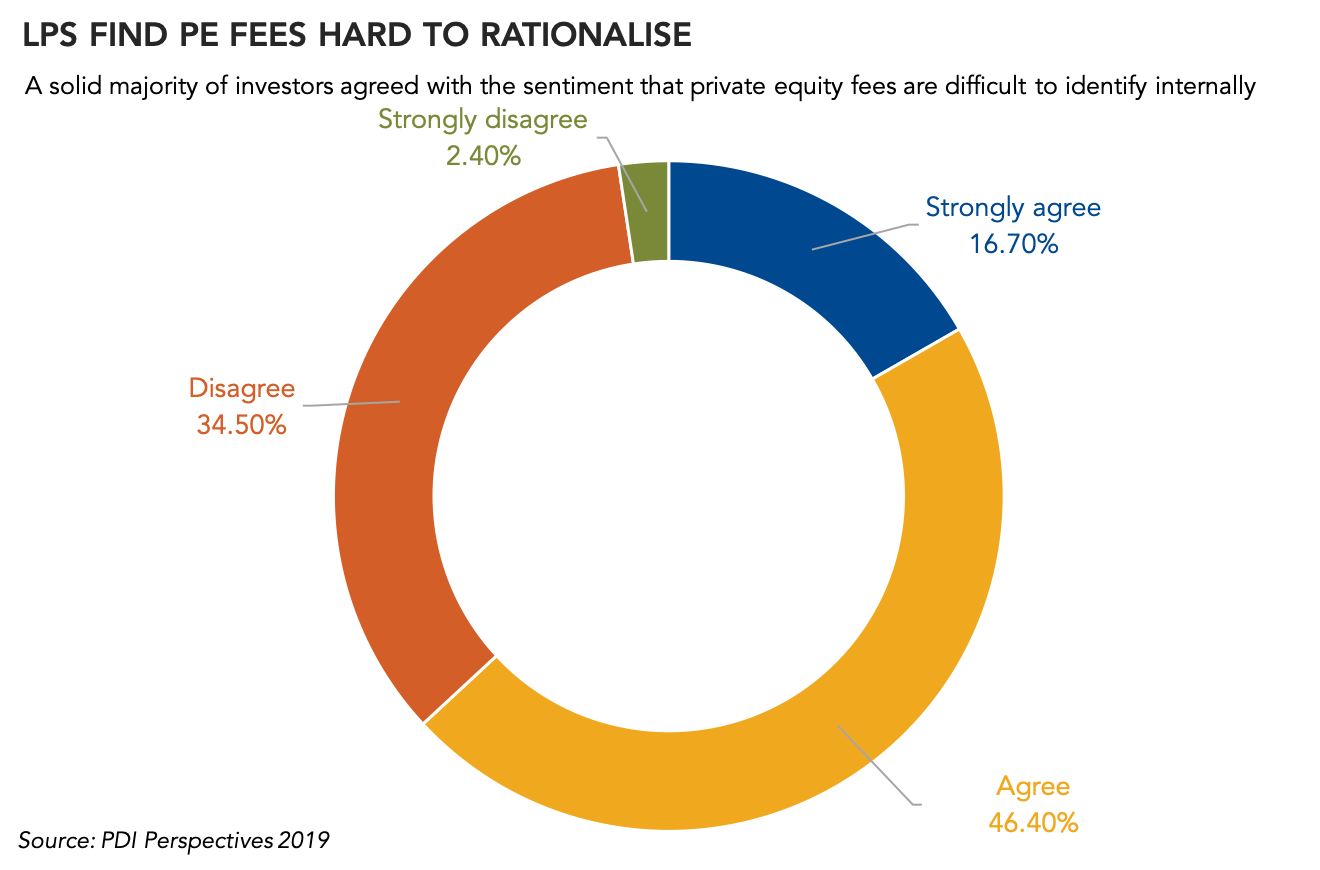
Some 63.1 percent of respondents to our annual investor poll, PDI Perspectives, either agreed or strongly agreed with the sentiment that private equity fund fees are difficult to justify.
And with many private equity firms charging on committed capital rather than invested capital, it’s hard to find fault with the LPs’ opinion. In an era characterized by loose deal terms and copious sums of dry powder, can a public pension plan really rationalize a 2 percent fee on a $5 billion fund that is largely sitting idle?
Certainly, fees for direct lending funds differ from those of private equity, but LPs’ take on private equity is a cautionary tale. Fees have been fungible. Sometimes the hurdle rate for senior debt is at 6 percent, sometimes it’s at 7 percent. Some charge a 15 percent incentive fee, others a 10 percent levy, while some charge a full 20 percent.
Returns have compressed though; as the asset class has mushroomed, the returns haven’t necessarily done the same; true, private credit killed public bonds last year. But returns relative to public markets is only one part of the equation – credit managers must also ask if their investors are being charged appropriately for the risk the firm itself is taking.
Direct lending, particularly, has moved from a play of “idiosyncratic alpha”, as First Avenue Partners’ Jess Larsen wrote for PDI, to a “beta-type performance” play.
In a world where directing lending is mainstream – and there are fewer proprietary deals, perhaps despite manager assertions – fair fees are a way to keep the asset class growing. If investors find good value in the asset class, there’s a better chance they’ll allocate more to private credit.


Latest news

With inflation running hot, rate hike expectations strengthen
A hotter-than-expected inflation reading has renewed expectations for near-term Federal Reserve tightening. The Consumer Price Index rose 0.6% month-over-month, pushing…

Open Tab
Leveraged loans keep running up a tab. Senior direct lending already knows what it owes.