


Private Debt Intelligence – 4/8/2019

Private Debt Fundraising Falls in Q1
Chart
Download Data
[wpdm_package id=’24235′]
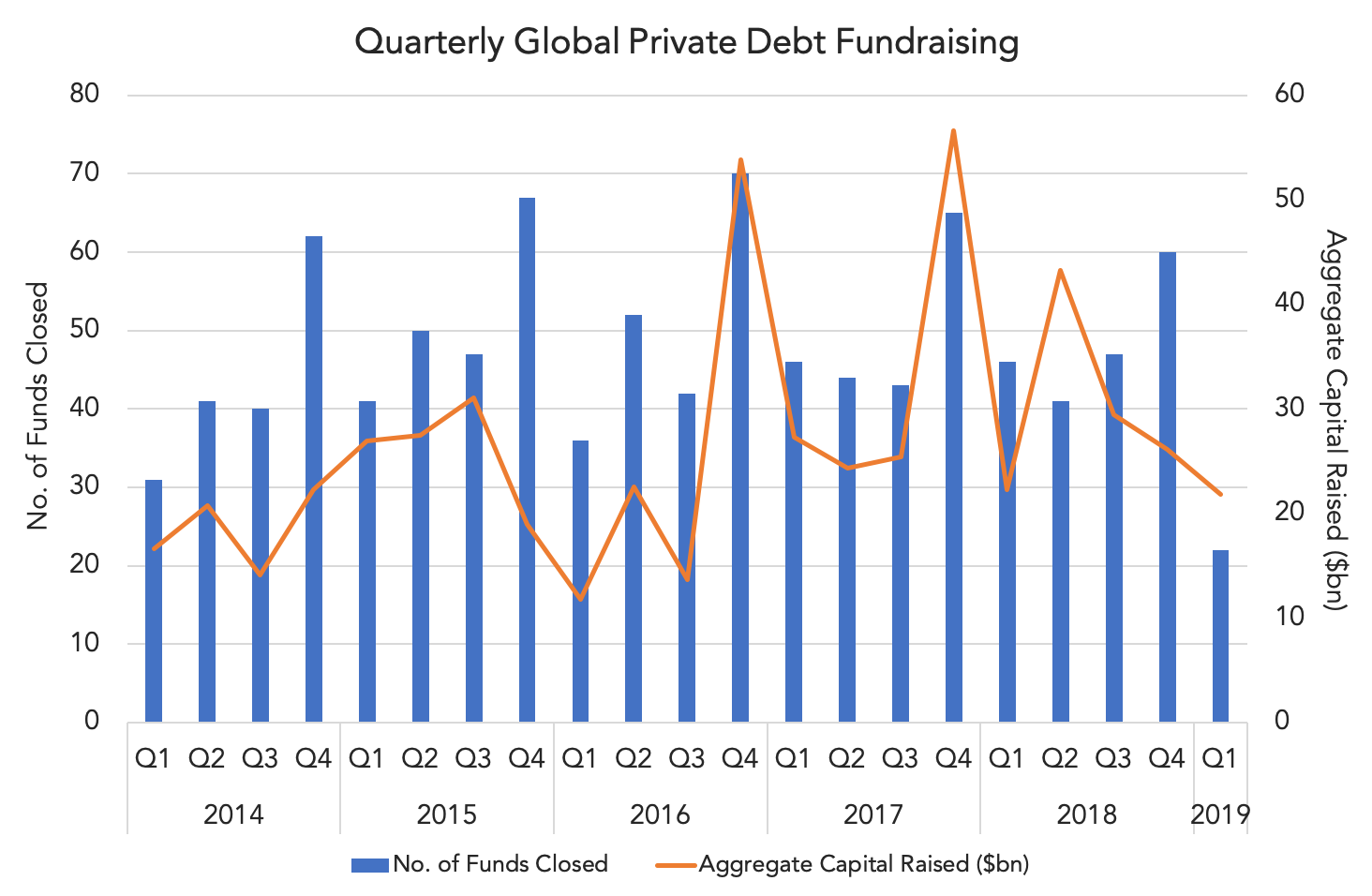
Private debt fundraising has been cyclical in recent quarters, with significant spikes in Q4 2017 and Q2 2018 failing to generate consistent momentum. The asset class has certainly not accelerated in the opening quarter of 2019: as well as the number of fund closures falling from 57 in Q4 2018 to just 18, this period also marks the lowest quarterly capital total ($20bn) since Q3 2016.
The role the that the industry might play for investors in the face of a market downturn is a topic of much speculation. Some private debt strategies, like distressed debt and special situations, are counter-cyclical, and may be well-placed to take advantage of opportunities that arise from a market correction. Investor appetite has shifted accordingly in recent months to favour distressed debt funds, but fundraising in Q1 has not reflected this, with just one distressed debt fund raising under $1bn.
Direct lending strategies, by contrast, saw nine funds secure $16bn – this represents 47% of the total number of funds closed and 82% of the aggregate capital raised. All five of the largest funds closed in the quarter were direct lending vehicles, alone accounting for almost $15bn in fundraising. This may be driven in part by the record levels of activity in the private equity deals market. Many direct lending funds provide funding for private equity-backed deals, so record deal making in that sector represents a wide scope of potential opportunities for the strategy.
While fundraising was lacklustre, the funds that reached a final close generally did so successfully. Only 20% closed below their target size, compared to 29% that did so across the course of 2018. In fact, two-thirds of funds in Q1 2019 exceeded their target size, a significant jump from the 52% that did so last year. The ability of fund managers to secure more capital than they target reflects the enduring appetite that investors have for the asset class.
Contact: William Clarke
william.clarke@preqin.com







Private Credit Defaults 101: Back to School
As Labor Day approaches, the unofficial end of summer is upon us. But, before we get too sad, there is also the familiar back-to-school energy.