



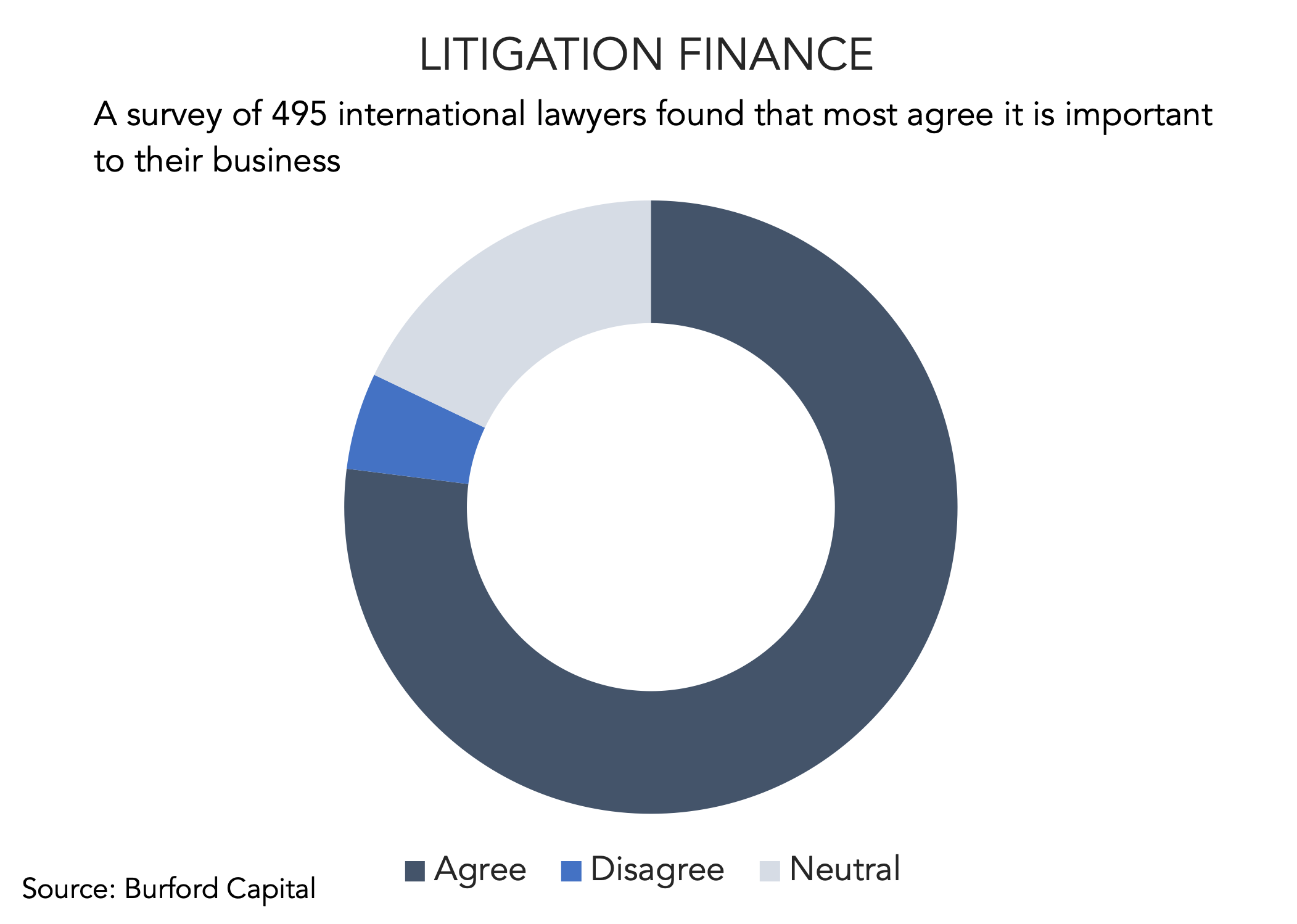
Litigation finance has found a way to attract the retail investor.
On the face of it, litigation financiers are not obvious candidates to join the massed ranks of those queuing up to try and attract retail investment. After all, there are those who say you may as well place your bets on the spin of a casino’s roulette wheel as take part in this niche corner of the private debt universe. Litigation finance involves what might be described as a binary outcome – you either win big or lose big.
A booming market estimated to be worth around $50 billion and growing fast, litigation funding involves a third party providing the finance which enables costly litigation cases to proceed. If the case is won, the funder receives an agreed share of the proceeds of the claim. ‘Winnings’ can sometimes equate to as much as ten times the cost of the investment. On the flip side, if the case is lost, the funder loses its money and is owed nothing by the litigant.
This scenario is a nervy prospect for professional investors, never mind the supposedly less knowledgeable and more vulnerable retail investor. Liti Capital, a litigation financier which PDI caught up with, claims to recognise this sensitivity. As with other fund managers determined to tap into the potentially huge retail market, Liti has turned to the increasingly popular method of tokenisation to allow investors to participate with relatively small amounts of capital.
But it is not following in the footsteps of other players in the market by offering tokens linked to individual litigation cases (which might be termed the ‘casino’ approach). Instead, it allows retail investors to buy tokens in its equity on the firm’s website. In doing so, these investors buy legal shares in the company with typical shareholder rights such as voting privileges and dividend eligibility.
The firm describes it, possibly with just a hint of understatement, as a “non-traditional fundraising route”. But by doing it this way, it means that investor risk is reduced as they are effectively being given exposure to the firm’s entire portfolio rather than individual cases – meaning that a case that’s lost may hurt the overall return but will not wipe you out completely. At a time when all eyes are on the retail investor base, it’s also an interesting insight into the types of innovation GPs will conjure to gain access to new sources of capital.
(Past performance is no guarantee of future results.)







Private Credit Defaults 101: Back to School
As Labor Day approaches, the unofficial end of summer is upon us. But, before we get too sad, there is also the familiar back-to-school energy.