



Private Debt Investor’s Europe Summit 2023 in London last week reflected on the state of play in the region. Here are five key observations.
1. Increasing moves by private credit firms into net asset value-based financing are in keeping with the growing recognition that private credit is the natural supporter of private equity rather than the banks. This shift “makes a lot of sense” according to one panellist as private equity and private credit are arguably natural bedfellows: “They are pools of capital with similar timeframes and risk appetites and the private credit track record can now be trusted as it goes back over a reasonably long time period.”
2. Some strategies are shifting away from the bank and bond markets to private debt – a convenient development given one panellist’s observation that the asset class needed to diversify away from corporate risk in the current environment. Cited in passing were the likes of trade finance, auto rental and leasing. “There’s all sorts of new ways of getting the risk-adjusted return that you want,” said one panellist.
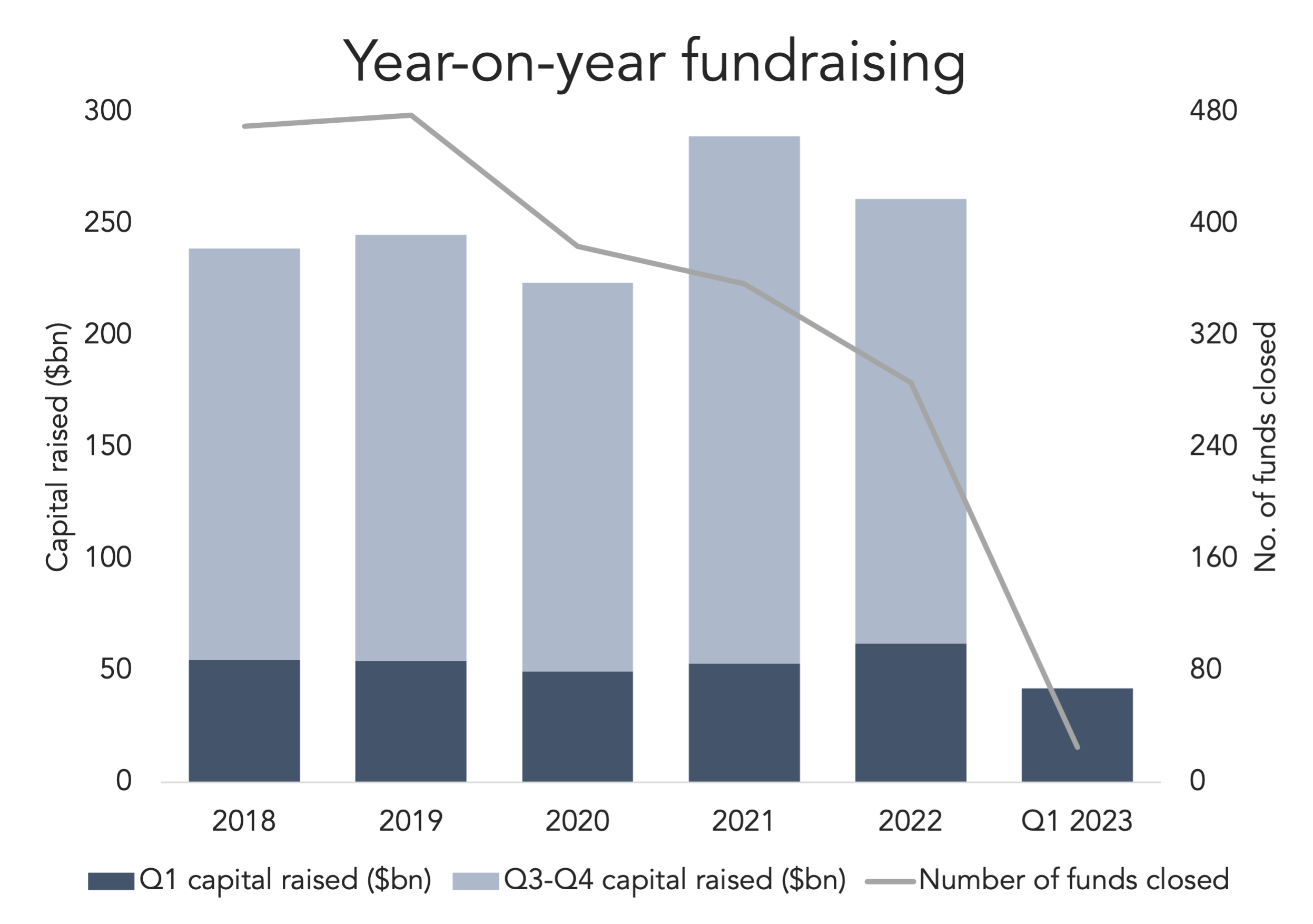
3. In a tough fundraising environment in general (see chart above), it’s unsurprising that the biggest and longest established managers are the ones tipped to account for the vast majority of whatever capital gets raised. But one panellist insisted that “you still have to look at emerging strategies because that’s where the best returns will be over the coming years. If you get your homework right, they will make your portfolio more robust”. Lending to lenders, leasing, consumer/SME lending and debt for growth companies were all mentioned in dispatches.
4. The pointed words of one panellist raised a few smiles: “If we don’t see distressed now, we won’t see it ever.” Covid had led to some brief deployment opportunities for distressed funds but a lull followed. Some feel that now things really are set to change, but the point was made that diversification is crucial; while the median return for distressed strategies in previous cycles was high, so too was the level of dispersion between the best and worst performers.
5. There were opposing views on the dangers of being over-concentrated in certain industries. One train of thought was that sector exposure would be a big differentiating factor as, in the last cycle, a handful of industries accounted for most of the losses. But there was also a view that distress this time would be sector-agnostic. Citing EBITDA addbacks and high leverage, one panellist said the problem was capital structures across the board, not particular industries.
(Past performance is no guarantee of future results.)







Private Credit Defaults 101: Back to School
As Labor Day approaches, the unofficial end of summer is upon us. But, before we get too sad, there is also the familiar back-to-school energy.