



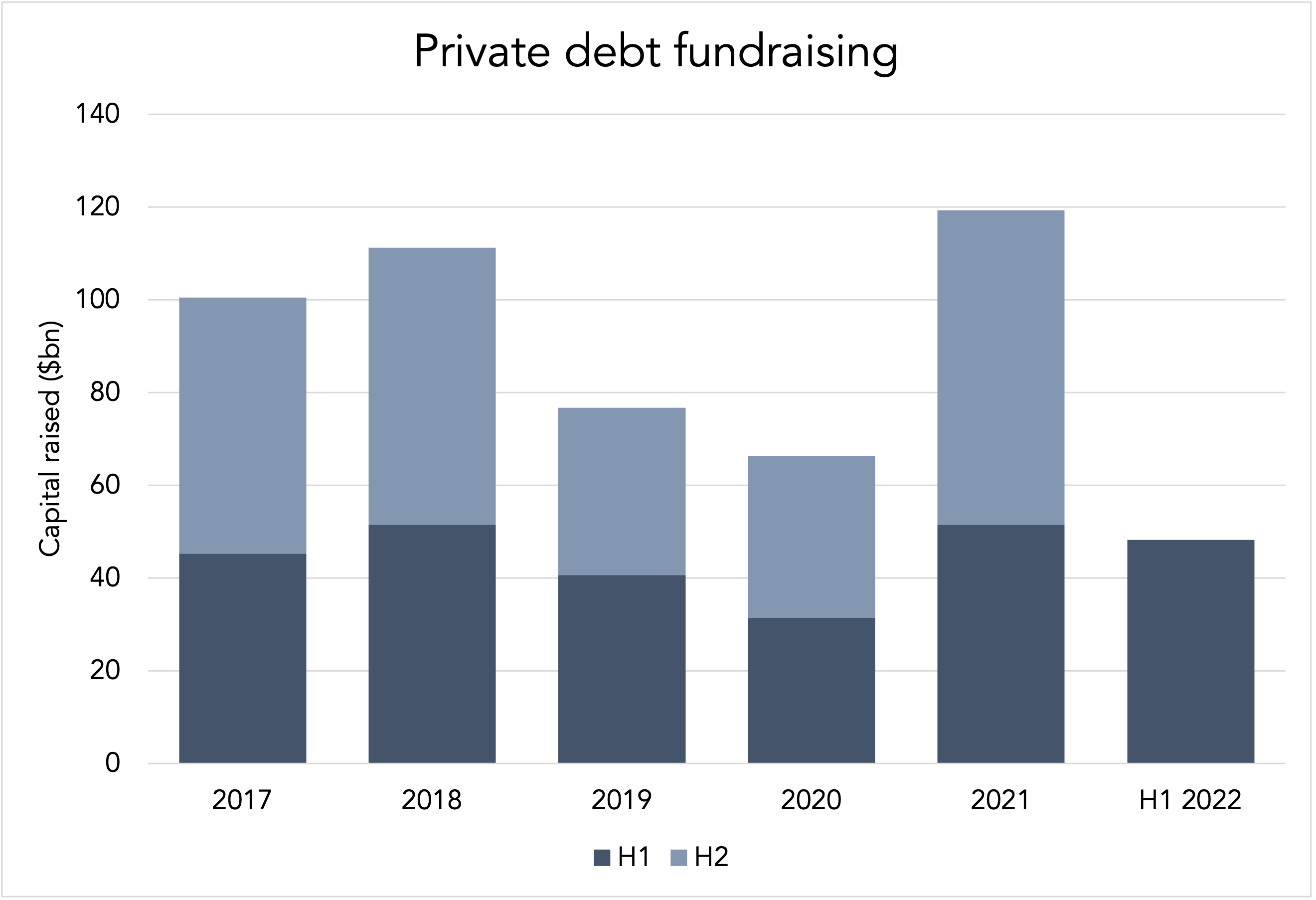
Our recent US Report highlighted five key themes in the world’s largest private credit market.
1. Fundraising has slowed to a seven-year low: The latest Private Debt Investor fundraising data shows just 84 credit funds raised globally in the first half of 2023 (see chart). This was the lowest number since 2016, while the $84 billion of capital raised showed a steep drop from the $119 billion raised in H1 last year.
2. Horizons are expanding: Despite the fundraising numbers, institutional investors are continuing to appreciate the private credit opportunity. Subordinated and mezzanine debt strategies are taking a greater share of investor dollars and there is a concerted push into specialty finance areas – either asset-based or asset-backed – with real estate a growing area of interest.
3. LPs keen on asset-based lending: Specialty finance is on the march – especially asset-based strategies. According to a KKR white paper, the private asset-based finance asset class grew 15 percent from 2020 to 2022 and is expected to increase from $5.2 trillion to $7.7 trillion by 2027, with the US responsible for most transactions. LPs are keen on asset-based lending because they find comfort in being secured by an identifiable asset, as opposed to cashflow.
4. Flexibility is required: The challenging macro environment has highlighted the ability of lenders to pivot in response to market dynamics. Managers these days want to be across asset classes and able to quickly migrate to today’s key thematics. One such shift is in the consumer sector, where investors concerned about the impact of inflation are focusing on prime opportunities with higher credit quality.
5. Underwriting discipline is paramount: M&A levels may have slowed but bank retrenchment is creating genuine opportunities and the more conservative credit terms favour debt funds, fund managers say. However, underwriting discipline is important and disciplined underwriting requires good data – which may necessitate reaching out to outsourced providers to supplement internal resources.
(Past performance is no guarantee of future results.)






Private Credit Defaults 101: Back to School
As Labor Day approaches, the unofficial end of summer is upon us. But, before we get too sad, there is also the familiar back-to-school energy.