



In a much-changed world, investors are inclined to support well-established strategies and geographies.
As the saying goes: the more things change, the more they stay the same. While the volatile inflationary and interest rate environment has created very different conditions for private debt firms to navigate, provisional data from our Investor Report H1 2024 suggests that limited partners are sticking with what they know.
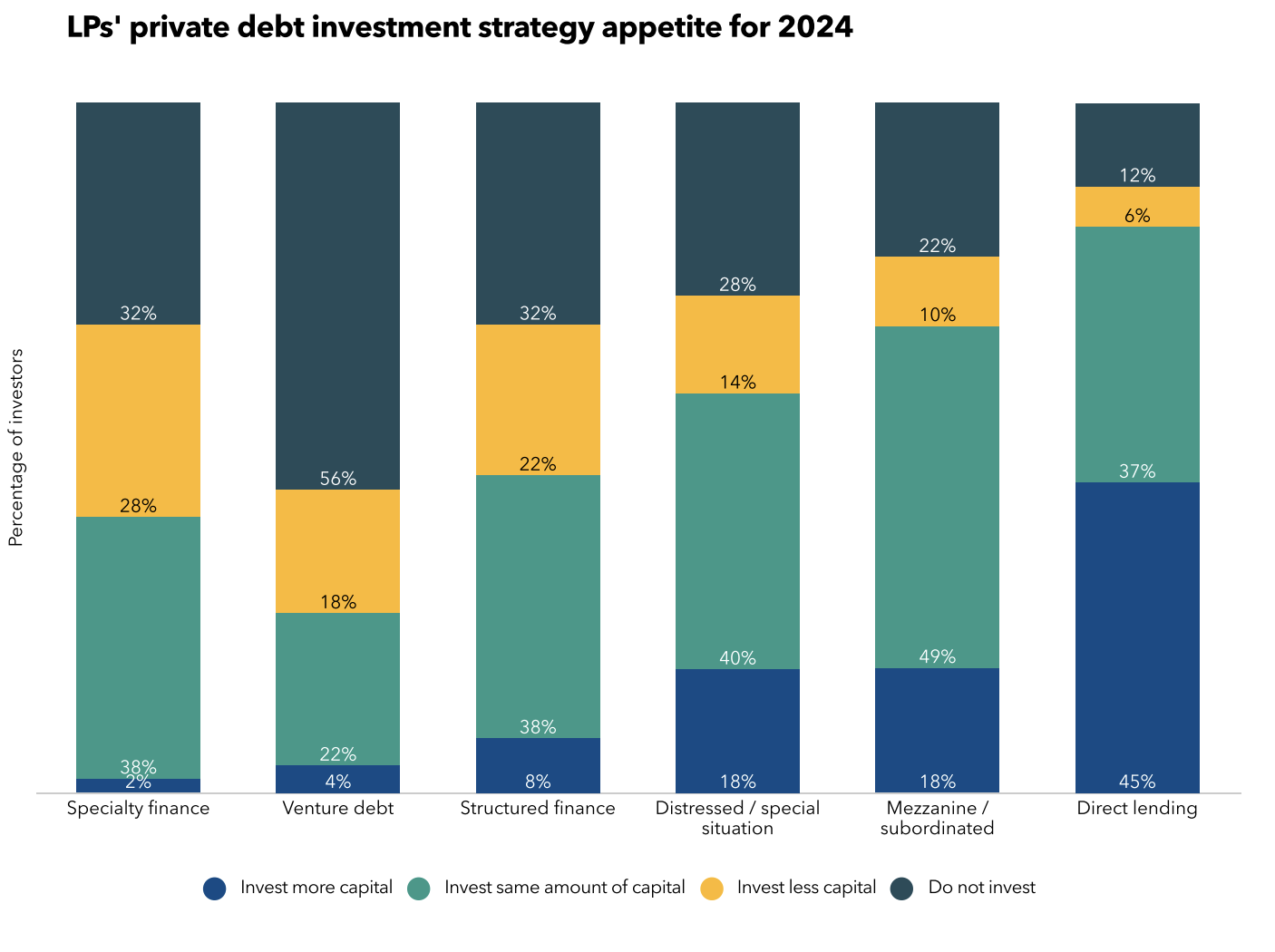
While various emerging strategies are hailed as today’s latest fashions – from NAV lending to specialty finance – it’s private debt’s bedrock strategy of direct lending winning the most support. The survey found 45 percent of LPs planning to invest more in direct lending this year, with 37 percent keeping their level of investment the same and only 6 percent looking to reduce it (see chart).
Keeping faith with established allocations is also evident when it comes to favoured locations, with the most popular region being North America. Almost a third (30 percent) of respondents said they had a greater interest in private debt’s longest established market in 2024, while 57 percent said their level of interest remained similar to previous years. Western Europe came second in the popularity stakes with respective figures of 17 percent and 65 percent.
When it comes to target private debt allocations, it’s clear that many investors still have a long way to go to fill their coffers. The survey revealed that 58 percent of institutions overall remain under-allocated to private debt in 2024, with 23 percent currently at target and 19 percent over-allocated. The under-allocation figure is highest for public pension funds at 61 percent.
Despite the fundraising challenges of last year and the early months of 2024, the survey strongly hints that the struggles will not last much longer. More than half (51 percent) of LPs said they wanted to invest more capital in private debt this year, with 41 percent keeping their investment the same and just 9 percent investing less.





Latest news

Rate hike expectations ease as term SOFR curve flattens
The CME six-month Term SOFR rate reached a recent high of 3.979% on July 28 before retreating to 3.837% as…
3Q26: New loan assets rise to 44% of total lending, a 3-year high
New loan assets as a proportion of total US loan volume make up 44% of the 3Q26 pipeline to date,…

North American GPs dominant as fundraising accelerates
Our PEI Private Credit 200 ranking also shows capital raising increasing overall – and accelerating especially fast for the largest…