



Click here to learn more.
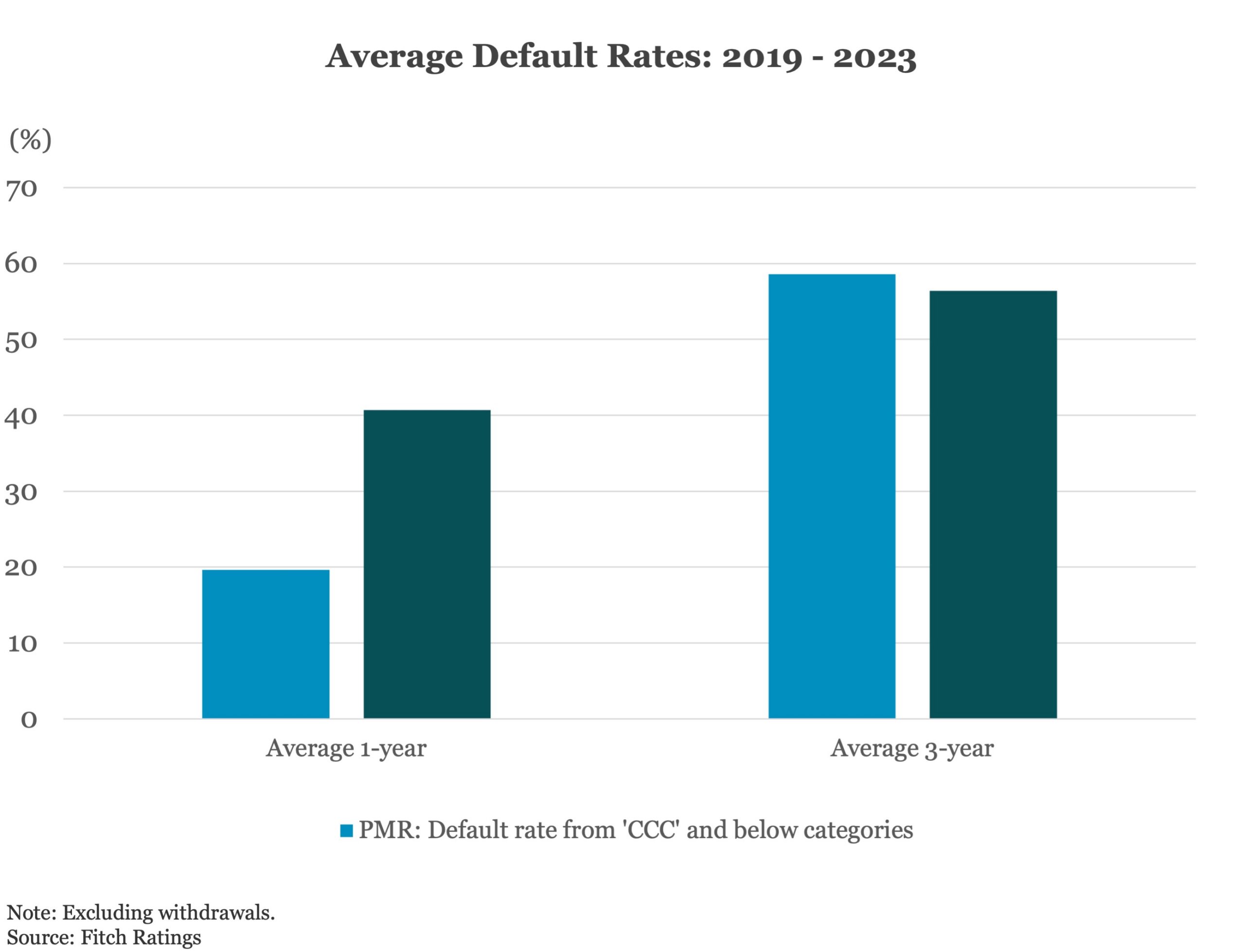
PMR issuers within the ‘CCC’ category have a lower average annual upgrade rate, lower average annual default rate and a higher average annual stability rate than publicly rated peers. Different stakeholder dynamics within the direct lending segment play a role in the lower number of defaults within the PMR portfolio.
Within the PMR portfolio, which is largely composed of loans made by direct lenders to sponsor-owned companies, sponsors typically work with lenders to support issuers as needed. On the sponsor side, this could come in the form of liquidity support such as equity injections, incremental shareholder pay-in-kind (PIK) loans or sponsor guarantees. Lenders may also offer other support, such as deferring or capitalizing interest payments, or granting covenant waivers and resets.
While the sponsor or lender partnership inherent in direct lending appears effective at moderating defaults in the short term, the benefit over the longer term is less clear.
For example, the average annual one-year default rate (excluding withdrawals) for issuers entering the year in the ‘CCC’ category or below is lower for PMRs at 20% compared to 41% for publicly rated companies. On a three-year basis, however, this relationship flips with 59% of ‘CCC’ and below rated PMRs defaulting over that time period compared to 56% of public ratings.



Latest news

Rate hike expectations ease as term SOFR curve flattens
The CME six-month Term SOFR rate reached a recent high of 3.979% on July 28 before retreating to 3.837% as…
3Q26: New loan assets rise to 44% of total lending, a 3-year high
New loan assets as a proportion of total US loan volume make up 44% of the 3Q26 pipeline to date,…

North American GPs dominant as fundraising accelerates
Our PEI Private Credit 200 ranking also shows capital raising increasing overall – and accelerating especially fast for the largest…