
Source: Debtwire Par
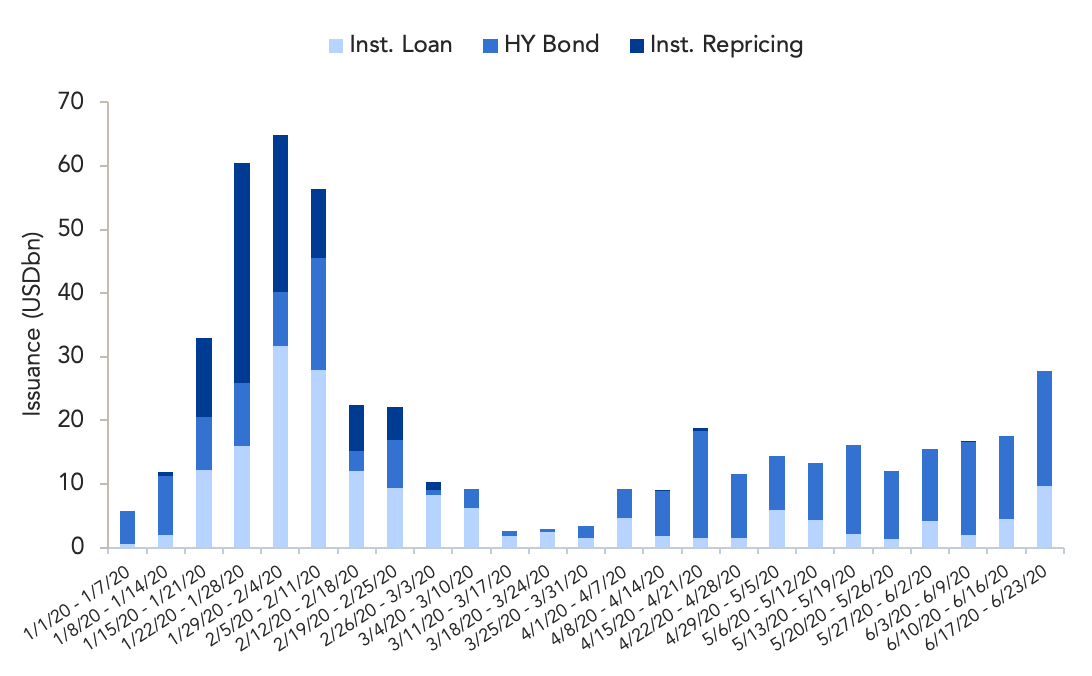
Weekly primary market activity has reached its highest level since the onset of the pandemic as issuers continue to tap the leveraged debt markets to address financing needs. The most recent week of 17 June to 23 June saw roughly USD 27.8bn of deals priced, marking the largest single-week total since well before the coronavirus (COVID-19) pandemic shut down much of the leveraged debt markets in March.
The recent milestone noticeably trails the roughly USD 65bn leveraged deal flow seen back in late January, however a significant portion of issuance at the time, roughly USD 24.6bn, was attributed to loan repricings which have all but vanished from the current market landscape.
Also of note is the recent uptick in loan issuance, though it continues to lag high yield bond volume. The latest week saw USD 9.7bn of institutional loans price, the highest weekly figure since early February. Institutional loans have similarly made up a greater proportion of combined issuance in recent weeks, increasing to 36% from 11% at the end of May.
High yield bonds still dominate the narrative however, making up the lion’s share of the market and posting the highest weekly issuance figure year-to-date, at USD 18.1bn. Month-to-date activity in June totals USD 51bn, already surpassing the full-month totals of USD 41bn and USD 46bn achieved in April and May when the markets reopened.
Notable deals to price in the last week include Ultimate Software’s USD 3.545bn loan refinancing package, Eldorado Resorts and Caesars Resort Collection’s USD 1.8bn term loan and USD 6.2bn notes supporting their merger and PG&E’s USD 2bn dual-tranche note offering to support its exit from bankruptcy.



Latest news

Direct lending volume fell 3% q-o-q to US$61bn in 3Q26
US direct lending issuance weakened in 3Q26, marking its third consecutive quarterly decline. Volume fell 3% quarter-over-quarter to US$61bn, 30%…

US private debt rolling one-year horizon IRR by type
Overall, private debt returns for most asset classes in 2025 are showing a decline compared with 2024 levels. Interest rate cuts are part of this story, but the drivers vary by asset class, with the most common explanation being spread compression due to crowded debt strategies, such as direct lending.