


Lead Left Interview – Ilan Nissan (Part 2)

This week we continue our conversation with Ilan Nissan. Mr. Nissan is a senior partner in Goodwin’s internationally recognized private equity and mergers and acquisitions business. His clients include global alternative asset managers including top tier private equity funds, venture funds, venture capital funds, bank holding companies, hedge funds and family offices. In addition to his work with clients, Mr. Nissan sits on the firm’s Executive Committee and leads the practice in New York. Second of two parts – View part one
The Lead Left: How about fundraising. How has that changed?
Ilan Nissan: If you’re a spin-off or a first time fund, it’s hard to raise money. There are too many established players with strong track records. It’s easier to go with an established platform. But for established funds – sized between $500 million and $2 billion – these are the people who have been flourishing.
TLL: What kind of things do investors look for in a successful fund?
IN: The due diligence is becoming more comprehensive. Are they investing in diverse businesses? Are they run by women? By minorities? Also, there is increasing focus on staying away from certain asset classes (notably weapons). We haven’t seen that as much before. Returns are still king, of course.
TLL: What’s your view on the trend of direct lenders holding more and more paper, compared with the syndicators who just want to distribute everything?
IN: The deal process used to be dominated by the money center banks where there were big syndications. But as the market evolved you started to see many hedge funds and alternative lenders playing in the space. The universe of lenders has expanded greatly, the margins are higher and there isn’t as much focus on syndication.
TLL: Ilan, do you foresee a change in interest rates?
IN: You’ll see rates go up in the fourth quarter. That’ll make the price of transactions more expensive. It will also make it tougher to raise money. There hasn’t been a real market adjustment in a while. The deal pipeline may slow down next year, I believe. Dodd-Frank could go away, or be substantially revised.
TLL: What’s been your biggest surprise this year?
IN: That we had such a fast recovery in the fourth quarter of last year/first quarter of this year. I didn’t think the market would be so resilient. There is a lot of quality out there, but also a lot of cash.
TLL: Do you see a correction coming?
IN: People have short memories. Many people are managing money who weren’t around during the Great Recession or the 2000-2001 downturn. They’re just not afraid. So is that pushing up valuations? I’m not sure. I do think we are late in the day though. I’m not sure if it’s dusk or 11:59. But it’s not 9am anymore.
TLL: North Korea does seem to be one of the things investors are worried about.
IN: Many people managing money are looking at events in a vacuum. Not many people are analyzing events in a broader context. I think it was Bill Clinton who said everyone now just consumes information in eight second sound bites. North Korea was a big issue a few weeks ago, and it’s still a big issue but it comes in and out of the national news depending on what other stories are in competition with it.
TLL: So what should we be looking for when things start to turn down?
IN: You will see investors quickly making tough decisions about their portfolios. Some companies will not make the cut and go away; others will survive and flourish.
Contact: Donna Gibson
dgibson@goodwinlaw.com


Latest news

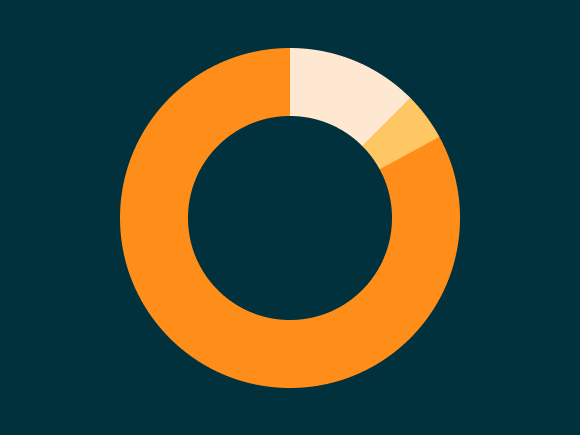
Information technology topped nonaccruals on a cost basis
Maturities of loans switching to at least partial PIK tends to be longer-dated than Octus’ other stress trackers: nonaccrual and fair value write-down reports.

US Broadly Syndicated Loan CLO Defaults in 3Q26 Driven by Distressed Debt Exchanges
Out of court restructurings drove nearly all default activity within Fitch-rated U.S. broadly syndicated loan (BSL) CLO portfolios in 3Q26, Fitch Ratings says.