Lead Left Interview – Robert Grunewald

This week we speak with Robert Grunewald, chief investment officer at BDCA Advisor, LLC. BDCA (Business Development Corporation of America) is a BDC focused on senior debt investments in middle market companies.
The Lead Left: Bob, please give us a little of your background.
Bob Grunewald: I’m the CIO for BDCA Advisors. We manage two vehicles, a non-traded BDC with about $2 billion of AUM, and the only open-end mutual fund exclusively investing in public BDC’s. We also expect to close on July 1 an acquisition of a company called Keating Investments. TLL: What will that do for you? BG: Keating is an advisor for Keating Capital which will be managing BDCA Ventures. This is our first foray into venture capital investments.
TLL: What was the original thesis behind BDCA?
BG: To go back a bit, I worked as an investment banker to the BDC space for twenty years, advising such companies as Ares Capital, Gladstone and Golub Capital on their IPO’s. That experience gave me a unique insight into how they work. Then after a stint at American Capital where I headed their Financial Services Investment practice, Pete Budko asked me to come to BDCA.
TLL: What was your assignment?

BG: There were things we wanted to do differently and better. Building a firm with scale was the key. Most BDC’s are small, which is problematic for investors. When we launched BDCA, we initially had $2.5 million in AUM. Today we’ve raised $1.5 billion of equity so far with $2 billion in AUM.
TLL: Where do you get your equity from?
BG: Mostly from independent brokers and registered investment advisors who distribute through the retail channel.
TLL: What’s the difference between retail and institutional distribution?
BG: I like the idea of a highly diversified investor base. We hear all time from our investors, “I like the idea of someone protecting my investments.” Our strategy is hitting singles, not home runs.
TLL: And how do you define ‘hitting singles’?
BG: Not stretching for returns. The other advantage to our investor base is they’re ok if you tell them: We aim to protect your book value, and our goal is an 9% dividend yield. The other advantage is our fee structure. We had a meeting with the rating agencies recently and they said “fees don’t matter to us.”
TLL: Hmm. They should care, correct?
BG: Yes, I couldn’t have disagreed with them more. We charge 1.5% compared with most BDC’s who are at 2%, which means we can go slightly lower in spreads if needed.
TLL: Where do you see risk in the market?
BG: At the moment, I think the second lien market is pretty risky, especially at the leverage we’re seeing. We try to keep at least 60% of our assets in first liens.
TLL: So where should the buy-side be focused today?
BG: We actually sat down as a team recently and kicked that question around. Would you rather have better structure or more leverage? The decision was to err on the side of high quality companies, and take the pain on leverage and spreads.
TLL: There’s a lot of pain out there.
BG: But take a close look at the borrower. Is it a great business? Then we’re willing to live with shortcomings on the deal itself. But we have an advantage in this market which is somewhat unusual. If the market causes us to dip down below our hurdles, we will waive our fees, if necessary, to preserve the dividend.

Latest news

US leveraged loan launches reach five-month high in September
The US leveraged loan market recorded $93.6b of launches in September, marking the busiest month of primary market activity since…
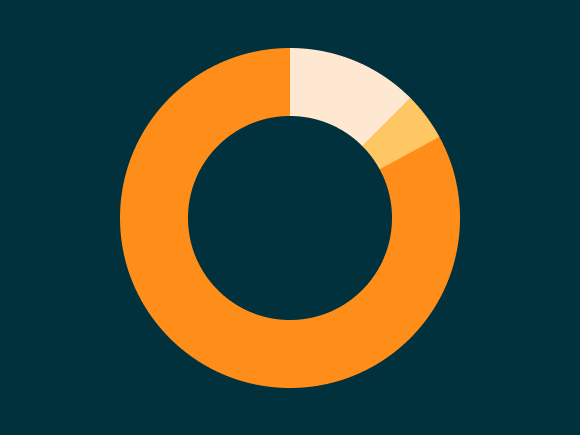
Information technology topped nonaccruals on a cost basis
The information technology sector moved from second place in the first quarter to the top of the list in the second quarter