



Click here to learn more.
Software Issuers in Credit Opinion Portfolio More Vulnerable to EBITDA Stress
Technology software issuers in Fitch’s model-based credit opinion (MCO) portfolio were more vulnerable to credit deterioration under a severe earnings stress than issuers in the portfolio excluding the technology software sector. Fitch ran a 20% EBITDA decline scenario on the MCO portfolio through the corporate credit opinion model (CCOM).
Technology software issuers’ baseline leverage and coverage metrics are weaker than those of the rest of the MCO portfolio across nearly all EBITDA levels and CCOM output categories. The percentage of issuers that received a lower CCOM output post-stress scenario was higher for technology software issuers than for issuers in the portfolio excluding technology software, at 59% and 44%, respectively.
Large Software Issuers Most Affected Under Stress
The stress had the greatest impact on technology software issuers with EBITDA above $100 million. In the baseline technology software portfolio, 29% of technology software issuers had EBITDA above $100 million, compared with 17% in the portfolio excluding technology software. The highest percentage of issuers with lower CCOM outputs post-stress scenario were those with EBITDA above $100 million: 75% for technology software and 61% for the portfolio excluding technology software.
U.S. MM CLO Ratings Resilient in Stress Scenario
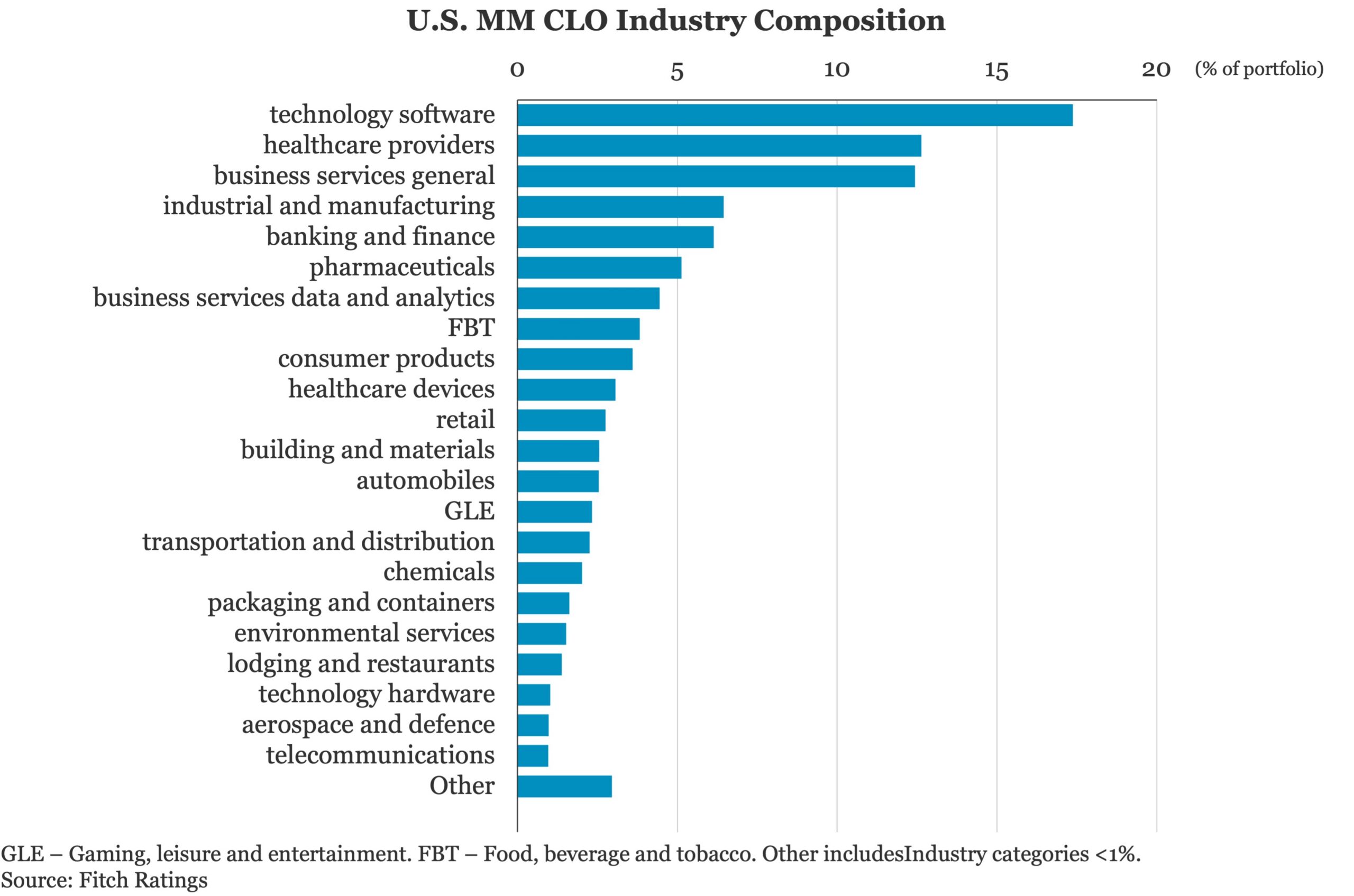
Fitch separately stressed MM CLO exposure to the software sector. The stress incorporated the CCOM output derived from the 20% EBITDA reduction stress applied to the MCO portfolio as well as rating migration to other technology software obligors on a negative outlook. The stressed MM CLO portfolio credit distribution slightly shifted towards the deeper sub-investment-grade buckets from the ‘B’ credit category, but the overall change was modest. The median Fitch-weighted average rating factor increased by 1.5 points. Most MM CLO tranches retained robust breakeven default rate (BEDR) cushions, with negative results in only a few notes.



Latest news


Information technology topped nonaccruals on a cost basis
Maturities of loans switching to at least partial PIK tends to be longer-dated than Octus’ other stress trackers: nonaccrual and fair value write-down reports.
US Broadly Syndicated Loan CLO Defaults in 3Q26 Driven by Distressed Debt Exchanges
Out of court restructurings drove nearly all default activity within Fitch-rated U.S. broadly syndicated loan (BSL) CLO portfolios in 3Q26, Fitch Ratings says.