



Click here to learn more.
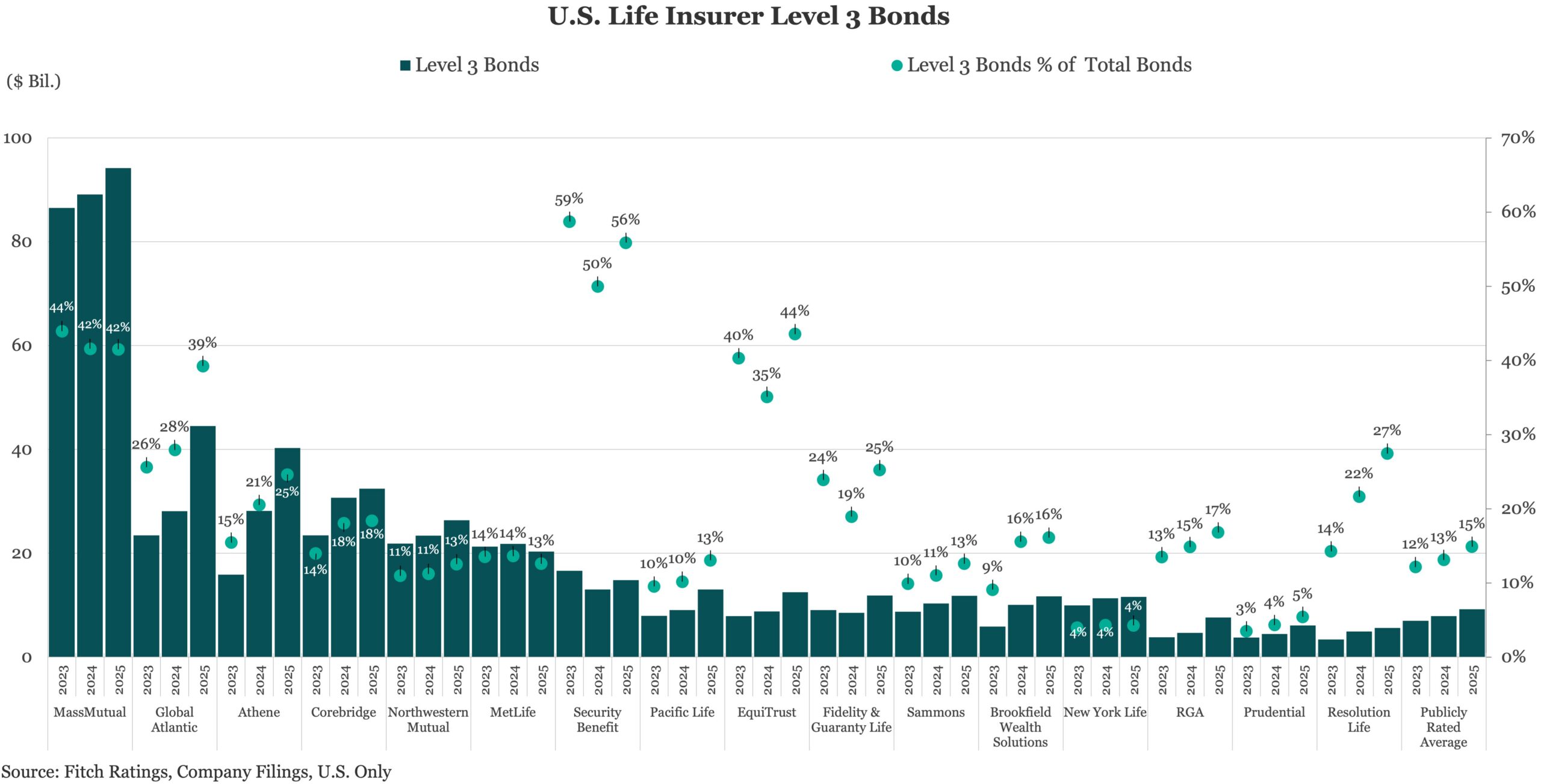
In recent years, bank and insurance regulators have pushed for more private credit disclosure in response to emerging risks. For life insurers, potential risks include meaningful investment exposure, capital adequacy for privately rated investments and potential conflicts of interest associated with growing ties with Alt IMs.
Banks face relatively lower direct risks given lending is typically done on a senior secured basis and represents a modest portion of overall loan exposure. Partnerships between banks and non-banks have risen with the evolving regulatory landscape, which have provided banks with a source of risk transfer and enhanced capital efficiency.
We do not currently view private credit risks as systemic despite exhibiting various “bubble-like” attributes including rapid growth, financial innovation, spread compression, heightened competition, growing retail participation and rising borrower leverage. Nevertheless, private credit warrants continued close monitoring and would benefit from increased transparency to gauge risks and resilience of the evolving sector.


Latest news


Information technology topped nonaccruals on a cost basis
Maturities of loans switching to at least partial PIK tends to be longer-dated than Octus’ other stress trackers: nonaccrual and fair value write-down reports.

US Broadly Syndicated Loan CLO Defaults in 3Q26 Driven by Distressed Debt Exchanges
Out of court restructurings drove nearly all default activity within Fitch-rated U.S. broadly syndicated loan (BSL) CLO portfolios in 3Q26, Fitch Ratings says.