



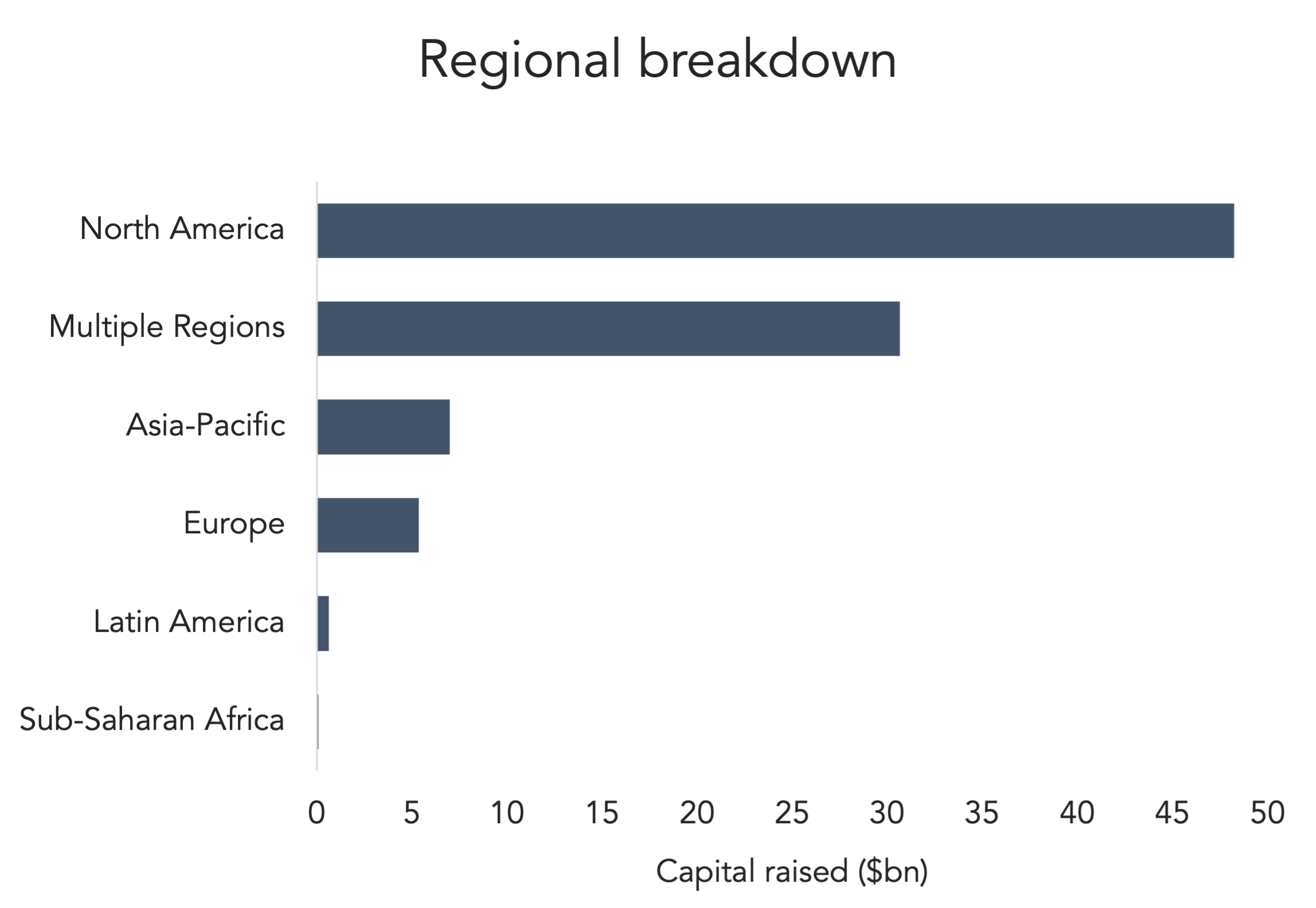
At our recent PDI Europe Summit, investors were considered hesitant to commit new capital but recognised good deals are there to be done.
Fundraising has been something of a struggle for Europe’s GPs, as indicated by the chart above. However, there was a sense at a recent PDI conference in London that at least some parts of the market are still viewed in a positive manner. Here are five talking points:
1. There’s an air of caution among LPs thanks to the denominator effect and revaluation. But there’s also an air of opportunity. Direct lending negotiating power has swung from borrowers to lenders, creating better pricing and terms. Speciality finance and structured credit are being looked at closely. In this environment, complexity has a premium.
2. Different investors are at different stages of their private debt allocation journey. Despite the denominator effect clearly being an issue for some, others have long-term strategic asset allocation objectives that they are far from meeting and will still want to be putting capital out the door.
3. There is close scrutiny of covenant quality. Maintenance covenants were kissed goodbye in the broadly syndicated loan market some time ago and the same had started to happen in top-tier sponsor-led unitranche deals as well. Lenders are now looking to reclaim some of that lost protection to make sure they have a seat at the table before defaults are triggered.
4. LPs are expecting to see more impact credit strategies. So far the space has seen opportunistic capital solutions where companies are proving a new technology and need transitional financing, plus some initiatives in infrastructure debt – but not much else. It’s anticipated that the impact credit map will get more populated, though the fundraising environment is currently tough.
5. More evergreen private debt vehicles are anticipated, offering periodic liquidity. The closed-end model will still have its place, of course, but many anticipate a shift to separately managed accounts and longer-term vehicles.
(Past performance is no guarantee of future results.)






Private Credit Defaults 101: Back to School
As Labor Day approaches, the unofficial end of summer is upon us. But, before we get too sad, there is also the familiar back-to-school energy.