



A couple of surveys imply contrasting views on the attractiveness or otherwise of private asset classes.
Family offices are strongly favouring private markets over public markets, according to a survey from Moonfare, a digital private equity platform, and Global Partnership of Family Offices, a UK-based association.
The survey found 50 percent maintaining a positive outlook for private market assets, while 70 percent hold a negative view of public market assets. Higher risk-adjusted returns was cited as the main reason for investing in private markets by 80 percent of those surveyed.
This contrast also extends to family office allocations, with 60 percent saying they had increased their allocations to private markets over the last two years, while half said they had reduced their exposure to both public equity and fixed income over the same period.
A recent bfinance snap poll, by contrast, showed other types of institutions shifting back to fixed income and away from private markets. The poll found 80 percent of UK corporate pensions looking to reduce their private markets exposure over the next 18 months, with 60 percent planning to increase the proportion of fixed income.
The poll found 24 percent of all UK investors expecting to reduce their private markets exposure over the next 18 months, compared with an equivalent figure of 4 percent for the previous month. Over the same period, those expecting to increase their fixed income exposure increased from 25 percent to 29 percent.
For UK corporate pensions specifically, 80 percent were expecting to reduce their private markets exposure over the next 18 months, with 60 percent expecting to increase their fixed income allocation.
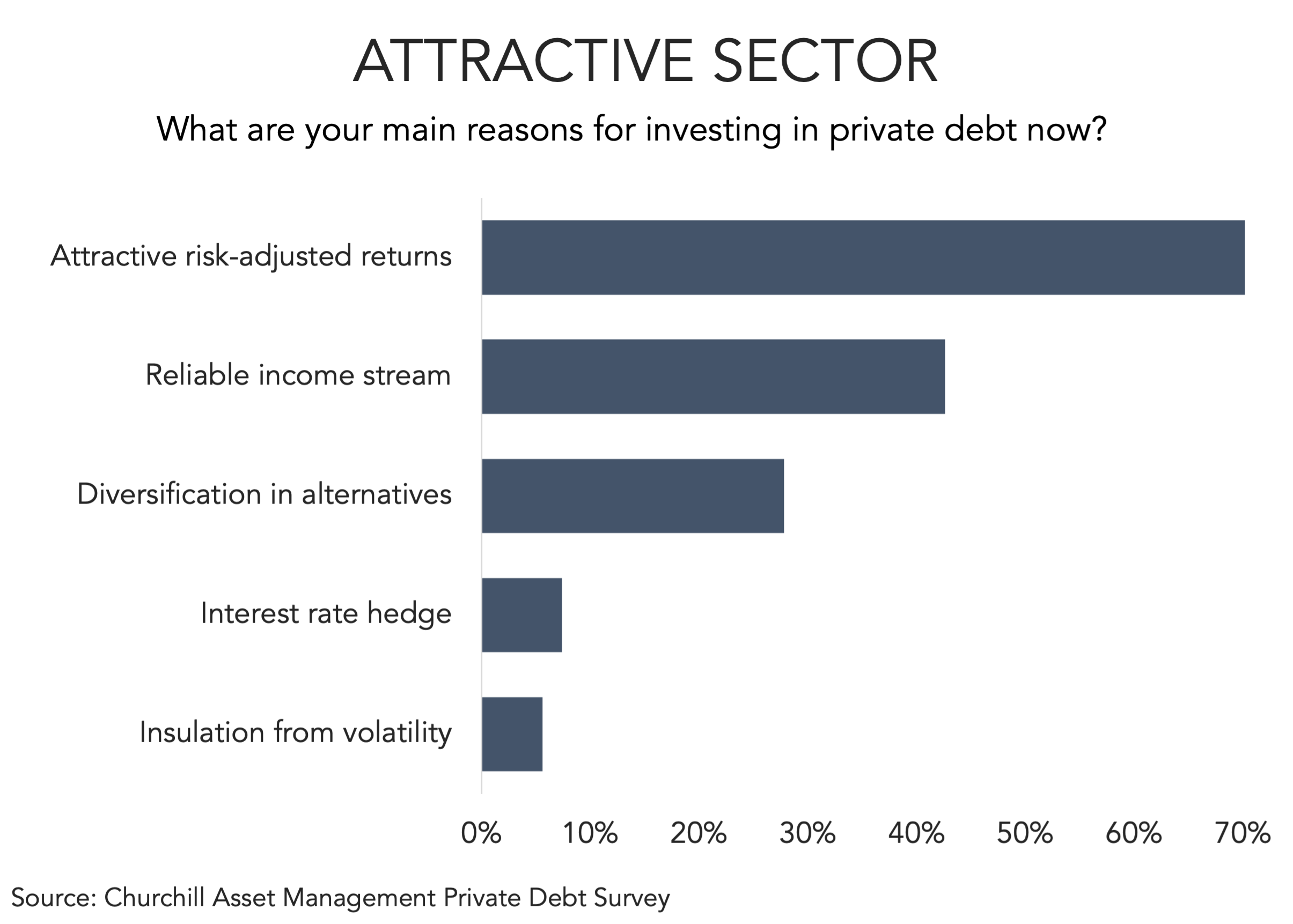
The wider private markets trend is mirrored in private debt. In early to mid-September, more than 40 percent of all UK investors were looking to increase their private debt allocations over the next 18 months, with around 20 percent looking to decrease them. By the time of the October poll, less than 30 percent were planning an increase, compared with around 35 percent planning a decrease.
(Past performance is no guarantee of future results.)







Private Credit Defaults 101: Back to School
As Labor Day approaches, the unofficial end of summer is upon us. But, before we get too sad, there is also the familiar back-to-school energy.