



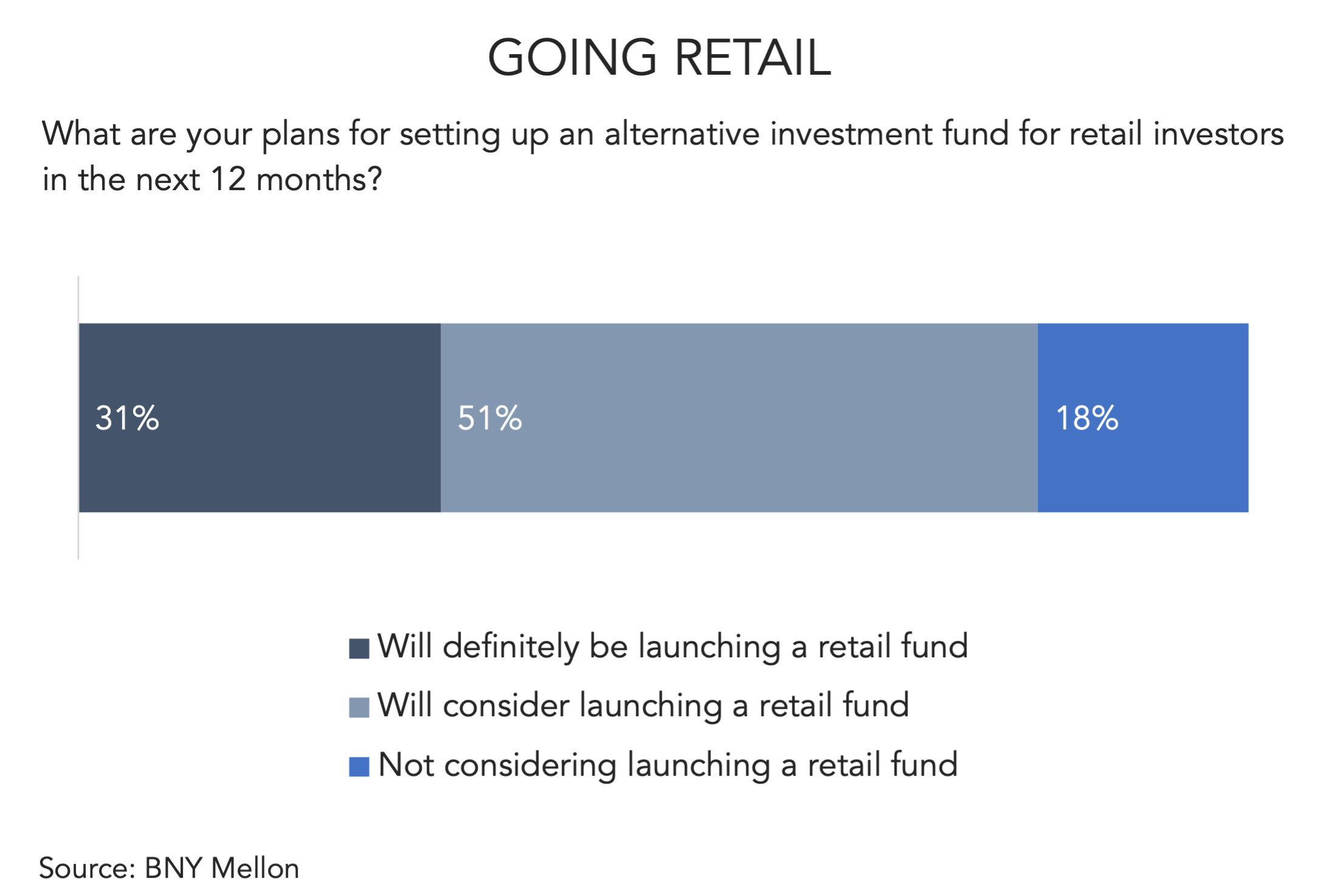
All the talk is around retail investment as fund managers reach out to this potentially huge investor base.
Retail investors have been beating at the door of the alternative investment industry and it appears the door is now being thrown open, as private debt managers increasingly fall over themselves to launch retail products and open or expand their retail distribution channels.
Retail investment in private debt is not a new thing, of course. For a long time, private investors have been able to buy shares in listed managers while the business development company market has offered a specialised route into the asset class for many.
But pressure has been growing to make retail investment easier, and there has been a strong response. Regulators have made access to alternative asset classes more straightforward on both sides of the Atlantic, stock exchanges have been more accommodating in trying to offer some liquidity for alternative asset products and digital wealth platforms have been expanding fast.
This is significant for an asset class such as private debt, given the sheer size of the retail market. At its investor day last October, Apollo Global Management estimated the global market for high net worth and mass affluent investors at $178 trillion, compared with the institutional market’s $102 trillion.
According to global asset management strategy consultant Casey Quirk, a Deloitte business, retail assets under management in the alternatives market are set to rise 8.5 percent in the next few years, compared with just 4.7 percent for institutions. Notably, retail holdings of private credit products are seen jumping 12.9 percent by 2025.
All of this looks likely to result in the expected big increase in investment in private debt and other alternative asset classes by retail investors. Of course, nothing in life is easy. Liquidity issues remain, investors may not have as much transparency as they should have into exactly what they’re investing in, and even clear outperformance versus fixed income may not be quite as obvious as it’s often assumed.
But it’s clear which way the wind is blowing, and a change of direction looks very unlikely.
(Past performance is no guarantee of future results.)


Latest news

Software, technology and consumer sectors lose deal share in 9M’26
The software and technology sector, the second most active sector in 2025 at 17% of total deal activity, slid to fifth place in the first nine months of 2026.


Leveraged loan investors see gains in November
Following a 0.25% decline in October, the Bloomberg US Leveraged Loan Index (Ticker: LOAN) has returned 0.60% this month through…