



Private debt managers have not been at the forefront of ESG in the past but times are changing.
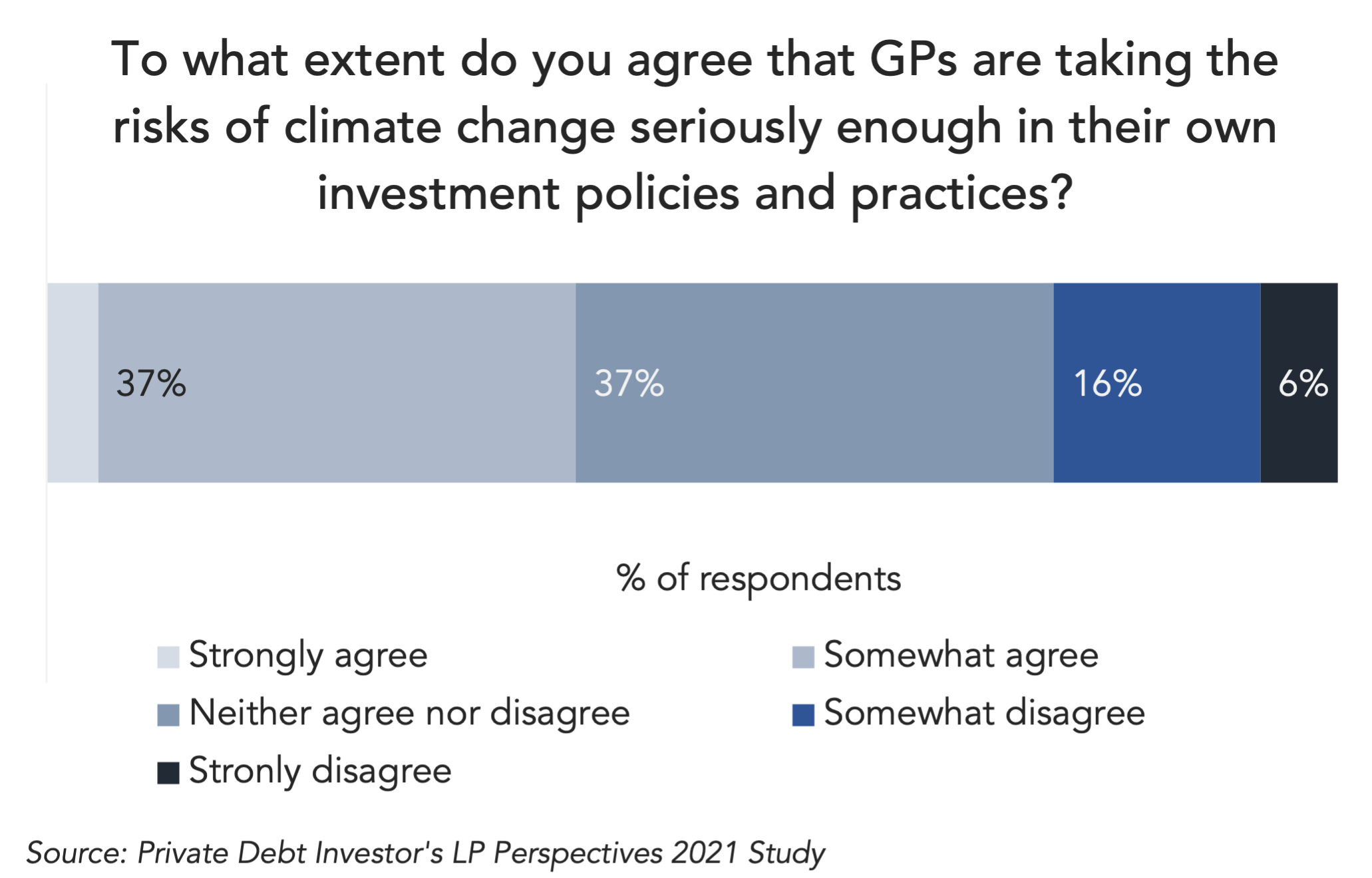
When we canvassed the opinions of limited partners about how seriously private debt fund managers take climate change, the responses were not exactly a ringing endorsement. Just 4 percent told our LP Perspectives study that they strongly agreed that fund managers were on top of the issue, with most opinion split on whether managers were sufficiently committed or not (see chart above).
One thing is clear though – if managers are not yet taking the issue seriously, they need to remedy that as quickly as possible. In the immediate aftermath of the global pandemic, there was some suggestion that perhaps climate change issues might slip down the agenda. In fact, across all alternative asset classes, the opposite has happened with investors putting the issue even higher on their priority lists.
Private debt, it could be argued, has up to now occupied the back seat when it comes to climate change with private equity taking its place on the front seat. The perception has tended to be that PE firms take a more proactive, hands-on approach to portfolio companies and, as such, are the more natural catalysts of change. However, there is now a much greater appreciation that lenders are often in a great position to take the steering wheel – for example, through loans that have margin-related incentives for hitting ESG targets, among other similar innovations.
One of the things we are often told at Private Debt Investor is that the asset class lacks a uniform approach on ESG, with different funds catering to a wide range of investor types with varying expectations. This may have provided something of an excuse for managers not to get their act together and provide full-blown reporting and disclosure. This stance is unlikely to endure, however. While it’s true that there is a lack of consistency, and probably will be for some time to come, many managers are now producing ESG reports on an annual basis. Showing this kind of willingness is the least that investors will expect in future.




Latest news

Q2'26 BDC analysis shows additional 184 bps of nonaccruals at cost
In a universe of 173 business development companies, or BDCs, Octus identified a total of $9.5 billion of debt (at cost) in nonaccrual status reported in the second quarter of 2026, a slight decline of 5% from $10 billion in the first quarter of 2026.

Reading the Board
The story changes depending on which numbers you’re counting.
Private Credit Defaults 101: Different Numbers, Different Stories
In Season 2 of Billions, Bobby Axelrod takes his lawyer Orrin Bach to an empty Yonkers racetrack in the dead of night.