



Market conditions have been described as a ‘perfect storm’ as various pressures increase.
Is something about to give in the financial markets? And if so, how would that affect leveraged loans? It would not be a stretch to be concerned about such a possibility, given recent geopolitical and capital markets events and the macroeconomic picture.
Indeed, any number of strategists have expressed such concerns. Even the US Federal Reserve, itself a prime mover in the capital markets, recently reiterated a warning it issued in December to banks with large derivatives portfolios and relationships with investment funds to essentially “know your counterparty”.
“We have the conditions for a perfect storm,” says Lance Roberts, chief investment strategist for RIA Advisors, a Houston wealth manager. Margin debt is at a record high and there’s a tremendous amount of corporate debt and leveraged loans. Higher interest rates will increase debt service and may make refinancing difficult. Geopolitical events are adding to already high inflation, and the Fed plans to reduce its $9 trillion balance sheet, which will lower Treasury prices and increase yields.
Although there have been no defaults in the latest vintage of collateralised loan obligations originally rated triple-A, 10 lower-rated CLOs have defaulted as of mid-March. US primary issuance of CLOs is down 17 percent through 31 March compared to the prior year period, while US refi issuance has dropped 65 percent, according to Bloomberg. Some big leveraged loan deals have stalled and leveraged loan issuance has declined 58 percent in the year to 15 March from the year-ago period, per Bloomberg data.
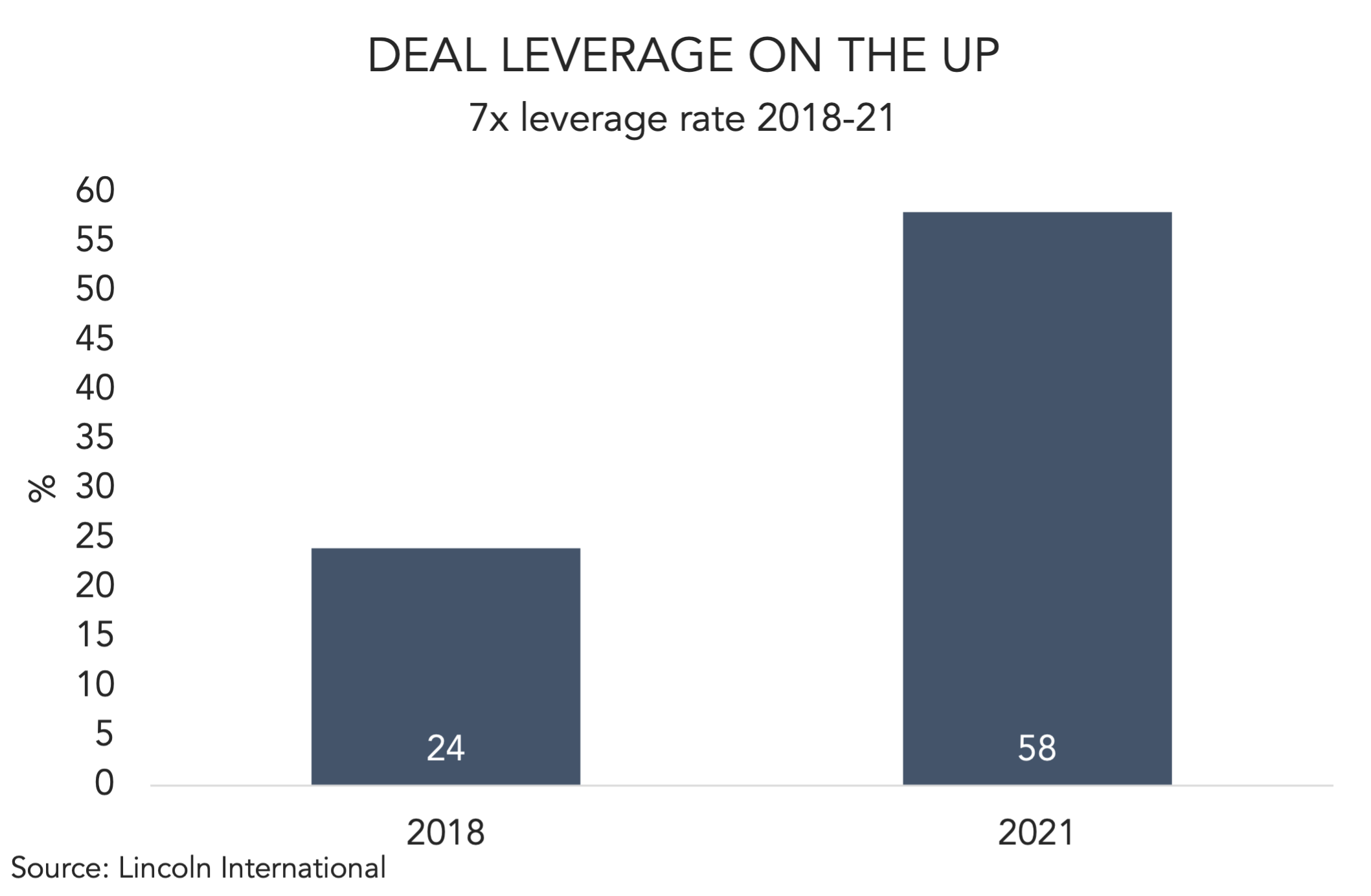
Leverage on private credit transactions climbed to a record high last year, with the share of deals closing at 7x or higher rising 89 percent year on year, according to a Lincoln International report cited in February by S&P Capital IQ’s Leveraged Commentary & Data (see chart above).
Of course, it’s important to note that volatility can create opportunity for private debt investors. But how well companies manage their way through the latest crisis, with mounting leverage, remains to be seen.
(Past performance is no guarantee of future results.)




Latest news


PE fund distribution rates
Following 2021, buyout distribution rates have fallen to roughly 10% to 15% below the 25-year average.

Sub line pricing flattens
A report on the topic also finds that investors are less concerned by leverage in NAV loans. Pricing for subscription…