
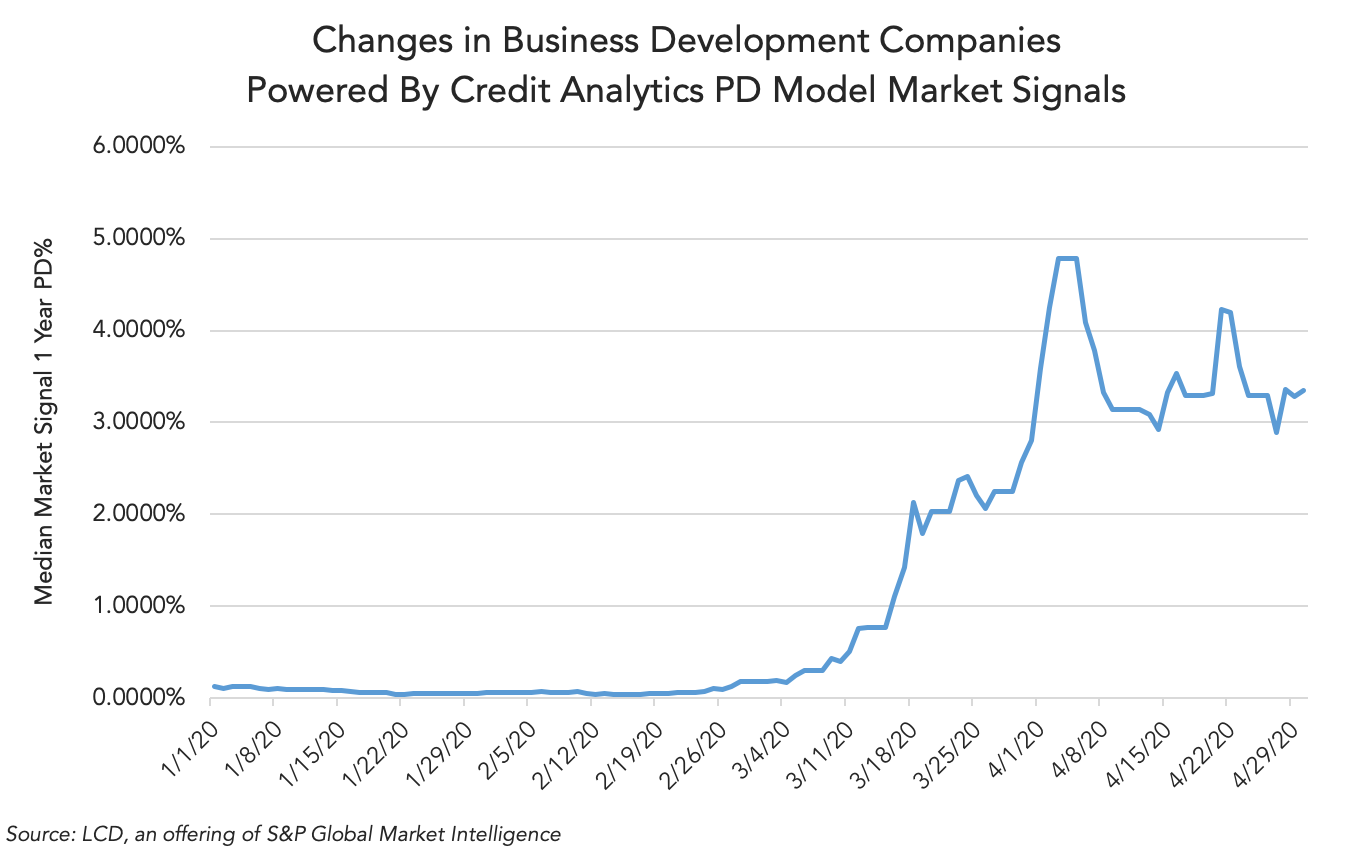
Current trading is looking bleak for BDCs, but they’ve come through even worse in the past.
BDCs are expected to see significant write-downs and defaults on portfolio company loans because revenues collapsed in much of the economy. A decline in the net asset value of BDCs may end up violating leverage covenants, which could lead their stocks to fall further and cause them to lose their investment grade ratings. An increase in non-accrual loans could trip other covenants under their credit facilities, likely leading to dividend cuts and limiting their ability to borrow.
Although many analysts have sharply lowered their forecasts for US second-quarter GDP – with some like JPMorgan predicting a 40 percent decline – others think investors continue to underestimate the collateral economic damage that will result from the extraordinary measures governments have taken to prevent widespread infection by the coronavirus and to flatten the curve, which brought many economies to an abrupt stop.
It is difficult to see how things could get much worse for BDCs, based on their recent trading. The Cliffwater BDC Index, which measures the performance of exchange-traded BDCs, plunged nearly 50 percent in March to its low for the year, although it has since recovered to a negative 36 percent at the beginning of May. Still, Stephen Nesbitt, chief executive officer of Cliffwater, points out that the March sell-off was less steep than during the financial crisis.
“BDCs got torched in 2008, and fell about 70 to 80 percent,” he says, noting that people over-reacted and everything came back. “It’s not as bad this time around.” In the previous crisis, there was less certainty about whether the government would intervene, he says. This time, there has been no hesitation. “The government has said we’ll do whatever is necessary.”
Moreover, BDCs have become much larger since the last crisis, with gross assets skyrocketing to $113 billion in 2019 from just $19 billion in 2009. “From that perspective, the business models and balance sheets are more resilient,” says Christopher York, an industry analyst at JMP Securities.

Latest news

YTD 2026 investment grade loan volume tops US$1.4trn, poised to set new annual record
Over US$1.4trn of investment grade loan volume has been completed so far this year, an 11% increase compared to the…