



Politicians are still fumbling for an appropriate response to the UK’s Brexit vote, but the drama has not destroyed prospects for private debt funds targeting the country.
The UK may have voted to leave the European Union in June 2016 but, in the almost three years since the referendum was held, little progress appears to have been made towards the country’s exit. As politicians continue to wrestle with the biggest challenge they have perhaps ever faced, there is even speculation that the public may be asked to reconsider the original vote through a second referendum.
For private debt managers active in the UK, one would assume this has all been rather damaging. Once seen as a safe haven for capital, the UK has long been the hub of the private debt asset class in Europe. The Alternative Lender Deal Tracker survey, produced by Deloitte, typically shows the UK accounting for around 30-40 percent of the total number of deals done in the region.
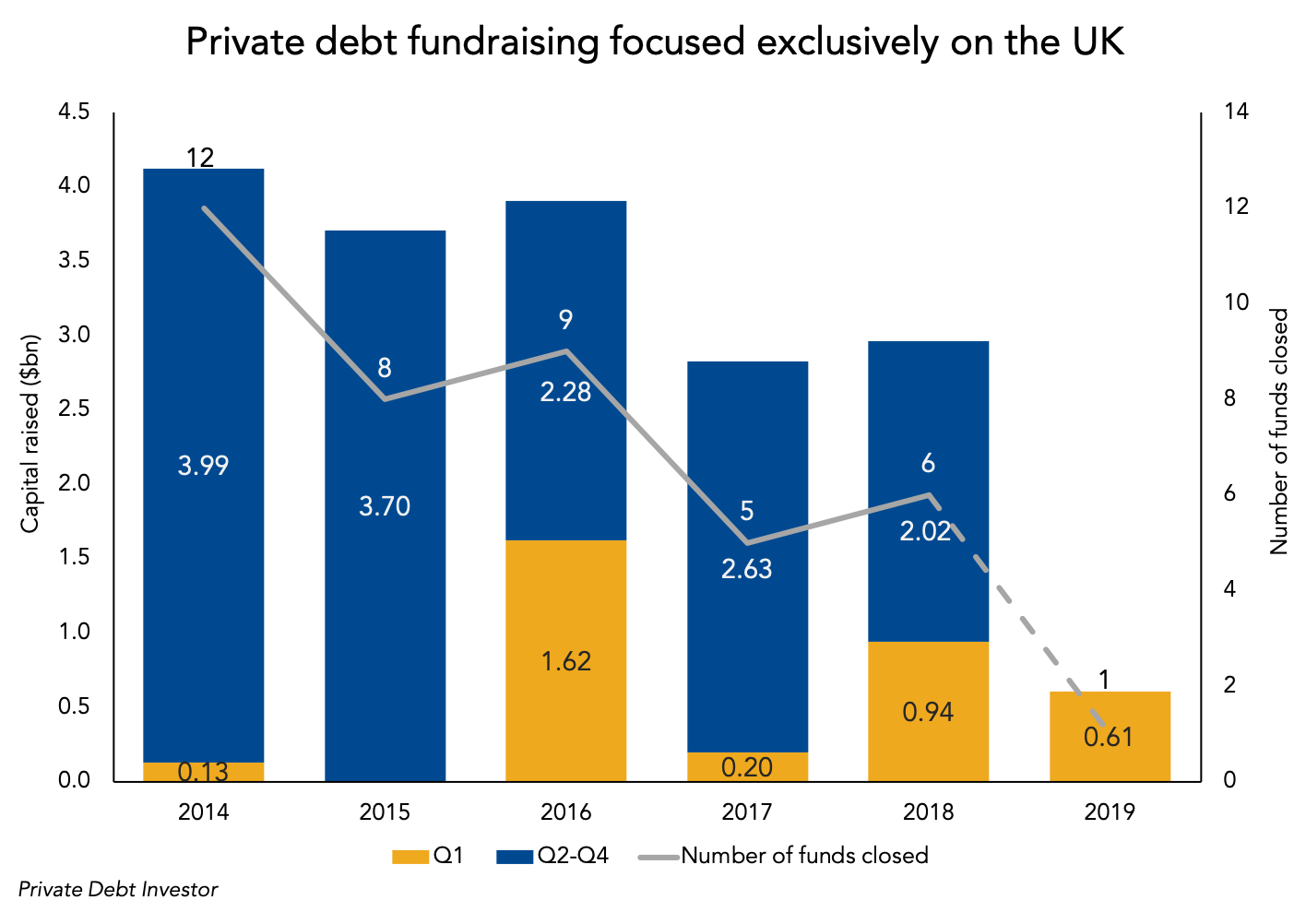
But have investors begun to lose faith in the UK? As can be seen from our chart, there has been a decline since the referendum year of 2016 in capital targeting UK-only strategies. Sources we have spoken with say investors within the European Union have pulled back from UK funds – although some hope that this reflects a “wait and see” attitude. Rather than any definitive verdict that the UK is a bad place to invest, European LPs may be biding their time until more clarity emerges around the political situation.
The positive news is that appetite for the UK may have declined but has certainly not dried up. We hear that demand for both UK-only funds and European funds with a UK element continues to be reasonably strong from LPs based in northern Europe, the US and Canada in particular.
These LPs would perhaps sympathise with the senior executive at a UK fund manager who told us that his firm is not in the business of “buying the market” – instead, it focuses on building highly selective portfolios of SME credits more exposed to micro than macro-economic factors. This approach, he insisted, was largely immune from the vagaries of the UK’s Brexit shenanigans.







Private Credit Defaults 101: Back to School
As Labor Day approaches, the unofficial end of summer is upon us. But, before we get too sad, there is also the familiar back-to-school energy.