



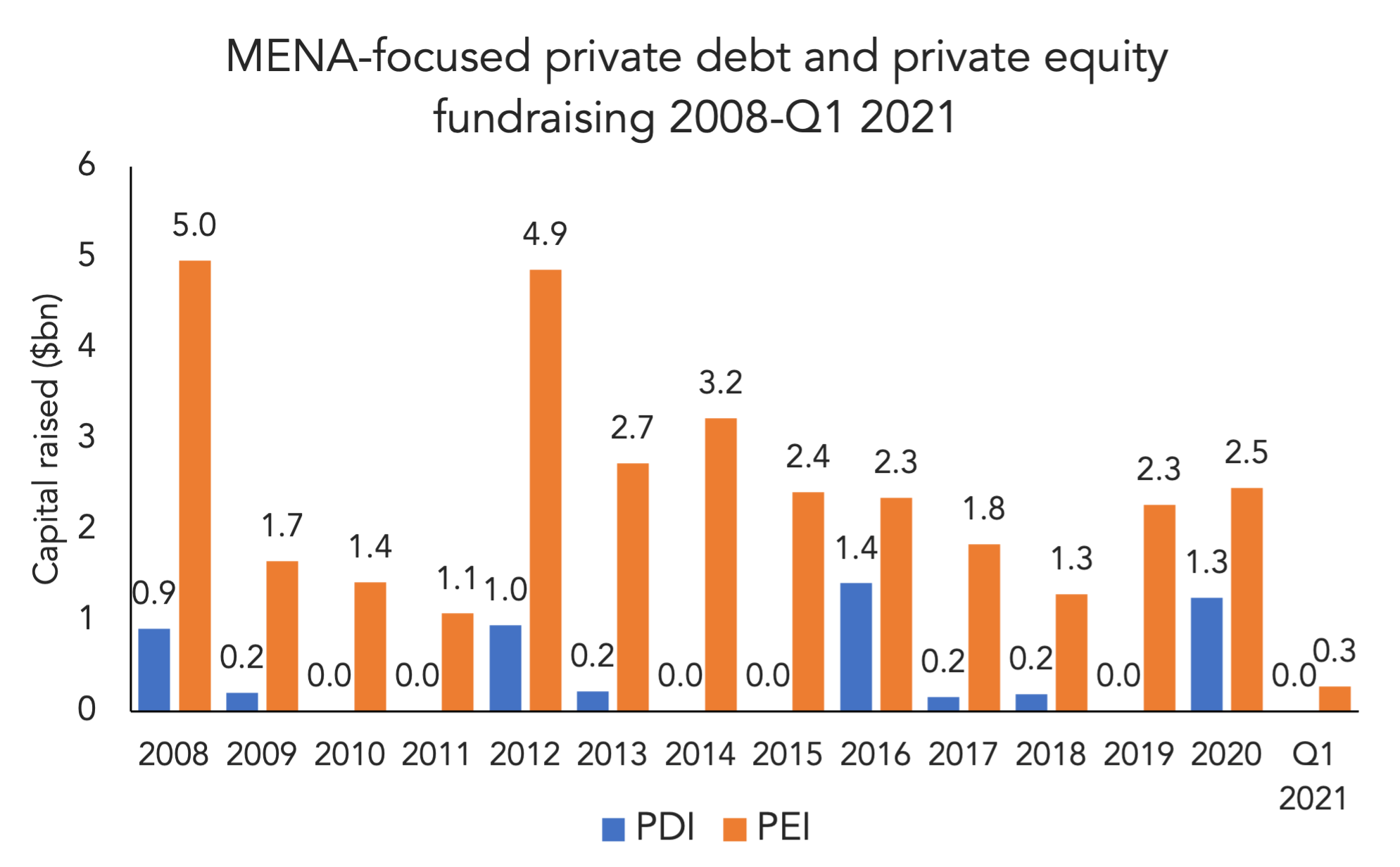
The region may be at a nascent stage, but private debt firms are seeing signs for optimism.
As a relatively new asset class, private debt remains heavily undeveloped outside of North America and Europe. But some are tipping the Middle East and North Africa to be one place that might just access the kind of rapid growth experienced in Europe over the past decade.
NBK Capital Partners was one of the earliest fund managers offering private debt in the MENA region with its first vehicle launching in 2009 and managing partner and head of private credit, Sikander Ahmed, believes the region could now be on the cusp of experiencing explosive growth in private debt.
“The covid-19 crisis has turbocharged deal pipelines,” he says. “We’re seeing something similar to what Europe experienced after the Global Financial Crisis where firms have had to turn to private debt to realise growth opportunities as bond markets become harder to access and banks are facing rising NPLs that are affecting their ability to lend to businesses.”
Similar issues face businesses in all stages of development. Ron Daniel, chief executive officer and co-founder of Israel-based Liquidity Capital, says the high-growth technology businesses his firm invest in are also on the lookout for new ways to get funded.
“Businesses in the region are seeking non-dilutive capital to fund their growth. Equity is very expensive right now and bank finance can be hard to get,” he explains.
The opening up of Shari-ah finance to make it more accessible for a range of local and international investors is part of the region’s ambitions to grow its status as a destination for financial services which will help drive economic development.
Shari’ah law creates an unusual competitive environment in countries where it applies which could be beneficial for alternative credit providers. Many banks in the region can’t lend capital so are only concerned with providing banking services to businesses, and historically this has made private equity an important source of finance for businesses.
Private equity, however, is relatively expensive, potentially costing an entrepreneur three and a half times as much as the cost of debt. This means it may not be viable to fund the whole of a business’s growth with equity, so business owners are looking at using debt as well to finance their plans.
(Past performance is no guarantee of future results.)


Latest news

Software, technology and consumer sectors lose deal share in 9M’26
The software and technology sector, the second most active sector in 2025 at 17% of total deal activity, slid to fifth place in the first nine months of 2026.


Leveraged loan investors see gains in November
Following a 0.25% decline in October, the Bloomberg US Leveraged Loan Index (Ticker: LOAN) has returned 0.60% this month through…