



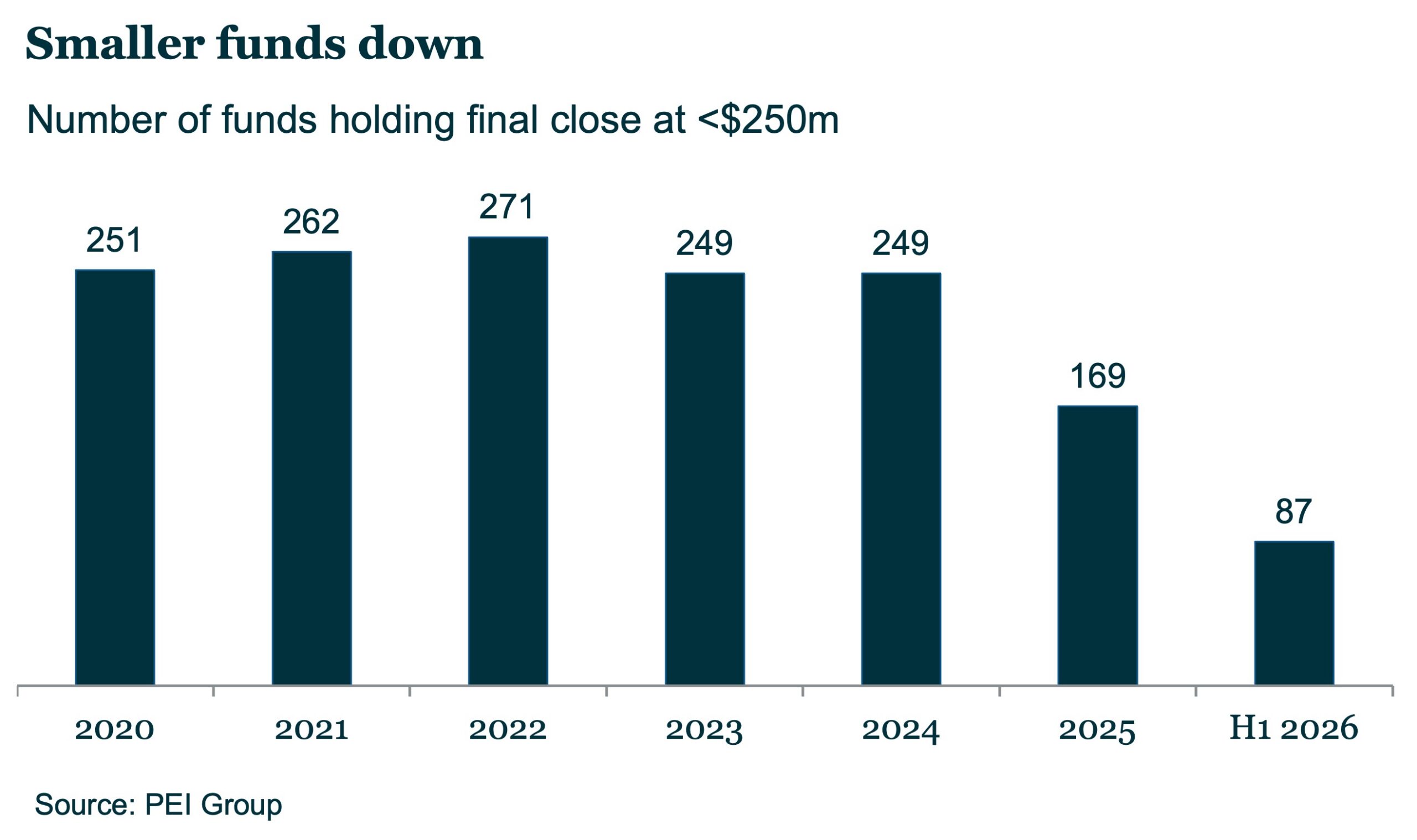
Analysis of fund-close data found that vehicles valued at under $250m have seen a rapid decline since 2024.
While PEI Private Credit has often noted the rise of mega-fund vehicles valued at above $1 billion, which have become prevalent since the beginning of this decade, this has not, until recently, been at the expense of smaller funds.
However, analysis of funds that held a final close at less than $250 million shows a sharp drop off, first seen in 2025 and continuing into this year.
While 2020 through to 2024 could reliably see the number of smaller funds closing at around 250 or higher per year, peaking at 271 funds in 2022, the figure drops by almost a third into 2025, with just 169 funds under $250 million holding a final close. Numbers for the first half of 2026 paint a similar picture at a little over half the 2025 figure despite record fundraising volume.
What are the causes of this sudden drop off? One theory is that limited partners are increasingly looking to commit larger amounts to a smaller pool of managers, hoping to reduce the cost of managing their portfolios and increase allocations to fund managers with a proven track record.
The other is that in the world of private credit, scale matters in a way that differs from other private markets funds. While equity boutiques can hope to take advantage of expertise in unexploited markets to make outsized returns, credit funds have few opportunities for upside and considerable back office needs to manage their loan portfolios, meaning bigger GPs with bigger funds are the way forward for the asset class.



Latest news

US Private Credit Transparency Highlights Uneven BDC Performance
Credit performance across business development company (BDC) portfolios remains uneven, although reported losses and non-accruals were broadly stable quarter over quarter, according to Fitch Ratings’ Private Credit Transparency Monitor for 2Q26.


Density of TVPI at 10 years after inception by fund size
Marquee managers seem to be victims of their own success. Strong performance brings in more capital, and the desire to grow AUM and please public shareholders inevitably leads to returns clustered around the market average.