



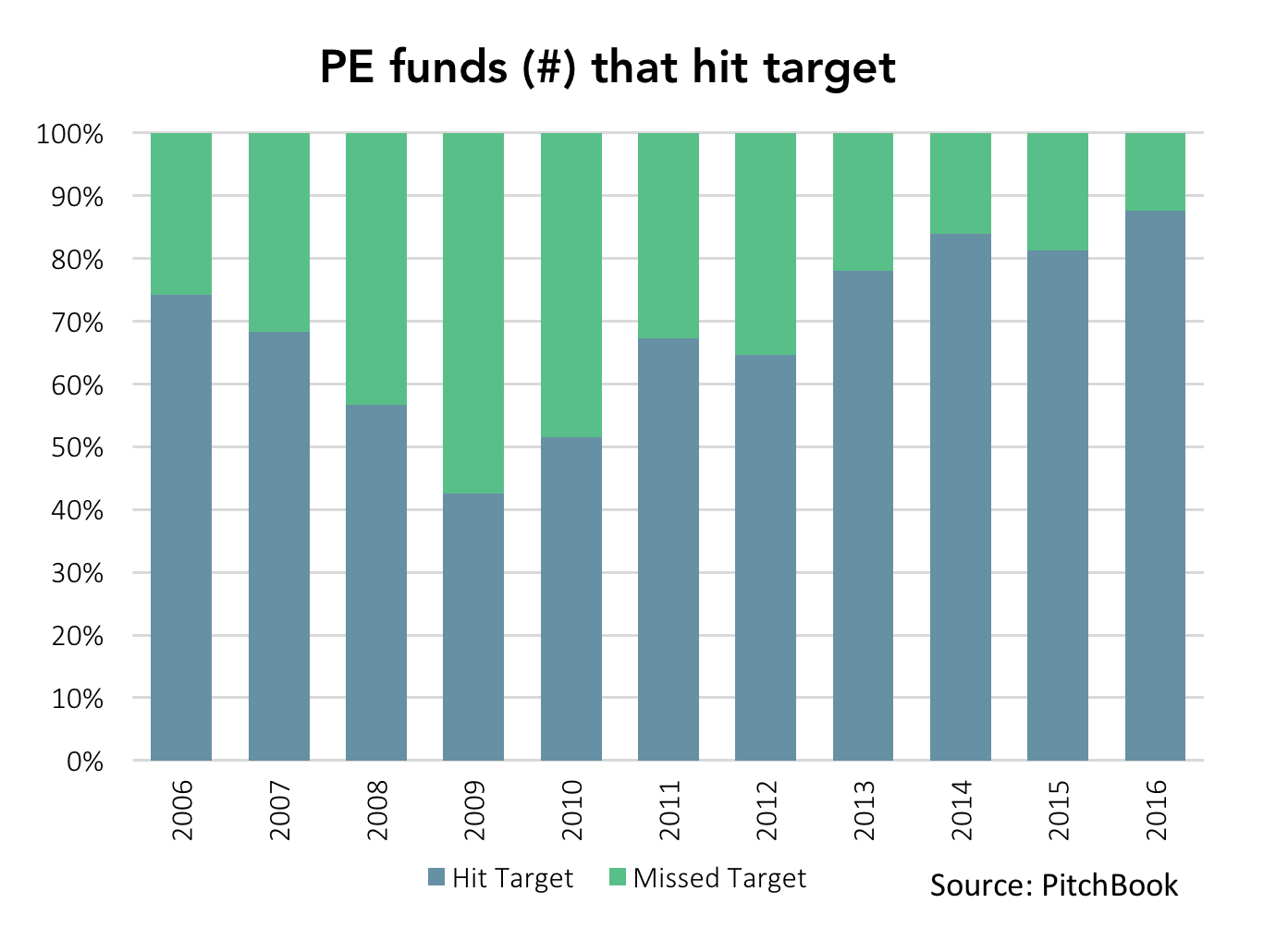
In 2016, 87.6% of private equity funds that closed in North America and Europe hit or exceeded their targets. Even compared to the heights of 2014 and 2015, that figure represents a clear high of the decade, and, moreover, the extent to which limited partners of multiple types are eager for exposure to the PE asset class. Given that 356 funds closed in 2016—a lower tally than observed in any of the three preceding years—but the average fund size soared to nearly $765 million, fundraising strategies are likely not only growing more targeted but also LPs are favoring more experienced managers. The macro conditions that have encouraged substantial PE fundraising success for some time are well known by now, especially as volatility remains persistent and fund investors are still hard-pressed to find worthwhile parking spots for significant sums. What must be reiterated, however, is it’s well-nigh inevitable that in the face of sustained lofty capital overhang and continued demand LPs and general partners alike would do well to anticipate potentially lower returns overall. All that capital will exert an upward pressure on valuations for some time to come via demand-boosting mechanisms for viable assets in the marketplace. PE fund managers can be relied upon to devise ever-more ingenious solutions of putting money to work, as evidenced by the growing incidence of lower-middle-market platform rollups and minority stakes in fast-growing businesses, however, anticipations are best set at the outset. Moreover, if interest rates ratchet up even slowly in the coming months, the pressure to source debt somewhat more sparingly and shrewdly will become at least a bit more apparent. The biggest factor, although, is simply that future returns will be more dependent on operating-margins improvement than anything else. And that is simply a difficult arena in which to contend, contingent as it is upon highly engaged ownership and ample resources in terms of both talent and (often) headcount. In brief, if such expectations were baked in to LPs’ assessments last year, and fundraising success rates were still that high, then similar proportions of funds hitting their targets is probable. However, as that may well not be fully the case, the fundraising environment in future is unlikely to be quite as amenable.


Latest news

Share of PE middle-market deal count by backing type
Add-ons remain the workhorse for middle-market deployment, accounting for 67. 1% of all middle-market transactions YTD, in line with activity seen in recent years.

Software deal share falls in middle markets, rises in large caps
In Q3’26 software’s share of total deals fell in both the Lower Middle Market (to 7%) and Upper Middle Market (to 9%), while Large Cap saw a modest uptick in share to 8%.

Secondary loan prices stabilize following steep declines
Secondary loan prices came under significant pressure through September and October, with the Bloomberg U.S. Leveraged Loan Index declining 119…