



News reached us last week that the great mathematician, Monty Hall, passed away at the age of 96. Better known as the host of the 1960’s TV hit, “Let’s Make a Deal,” Mr. Hall lent his name to game theory for the so-called 3-Door Monty Hall Problem.
Behind three doors there’s a brand new car, and two goats. You pick Door #1. Monty tells you there’s a goat behind Door #2. Should you switch your choice?
We’ll return to this puzzler in a moment. But first, consider similar choices confronting leveraged loan investors. Should you pick a broadly syndicated loan that has no maintenance tests (i.e. cov-lite), a large middle market cov-lite loan, or a large middle market loan with a maintenance test, albeit a wide cushion between budget and test?
Of course, other considerations come into play in these credit analyses. But bigger and better companies earned cov-lite status because…well, they were bigger and better companies. With ebitda over $100 million, mega-credits were often bond issuers as well with cross-over accounts accustomed to incurrence-only financial tests.
As an investor in a large liquid loan, if you grew uncomfortable with the credit you could trade out at a reasonable price. This is generally not the case with midcap borrowers. Smaller tranche sizes reduce tradeability. Without a leverage maintenance test lenders are forced to sit on the sidelines if the company’s ebitda deteriorates. All they can do is watch helplessly as the business spirals into a payment default.
Compounding the problem is faux ebitda. As we covered last week, borrowers’ cash flows are increasingly inflated via adjustments and add-backs. The effect is to mask the company’s true leverage which can be significantly higher. And as rating agencies have shown over the years, nothing contributes more to higher loan defaults and lower recoveries than high borrower leverage.
Theoretically, as the company achieves its performance goals, the gap between fake and factual ebitda should narrow. Unfortunately a growing number of credit agreements allow adjustments for covenant calculations up to two years down the road. A lot can go wrong in two years.
Lenders are also allowing sponsors more freedom to incur incremental debt. The leverage you sign up to isn’t necessarily the leverage you end up with.
But we digress. While a maintenance test with a wide cushion isn’t ideal, it’s better than no test at all. So we pick Door #3. Or even better, source traditional middle market loans with a real covenant. As scarce as these opportunities might be.
Back to Let’s Make a Deal. Should you change your Door #1 pick? Turns out that since there’s twice as many goats as new cars behind the doors, your first choice is wrong two-thirds of the time. Conversely, you’re right only one-third of the time. So you’re two times better off switching your vote.
Now if only loan investors had fewer goats lurking behind closed doors.


Latest news

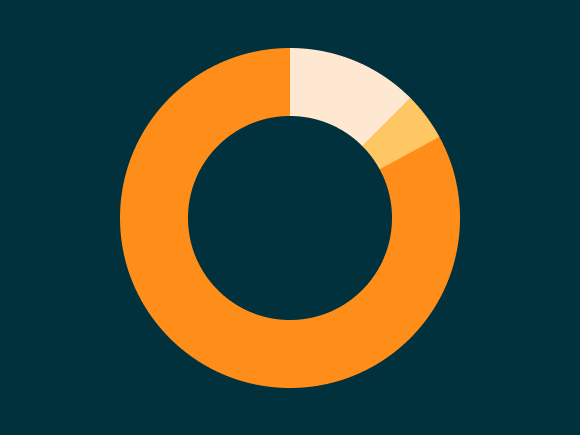
Information technology topped nonaccruals on a cost basis
Maturities of loans switching to at least partial PIK tends to be longer-dated than Octus’ other stress trackers: nonaccrual and fair value write-down reports.
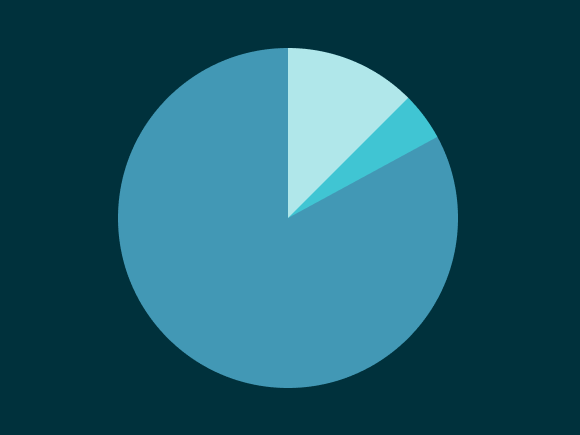
US Broadly Syndicated Loan CLO Defaults in 3Q26 Driven by Distressed Debt Exchanges
Out of court restructurings drove nearly all default activity within Fitch-rated U.S. broadly syndicated loan (BSL) CLO portfolios in 3Q26, Fitch Ratings says.