



Median Multiples for U.S. PE Wane Further
Even taken with a grain of salt, the decline in median EBITDA multiples for U.S. private equity buyouts has become more and more pronounced as third quarter numbers roll in. Faced with the headache of high valuations, PE firms have not only been dialing down activity—albeit at a sedate pace – but also paying less. An array of drivers are behind this shift, with the usual suspects a decline in the supply of quality targets after a couple years of heavy deal flow as well as reluctance to overpay and depress future returns. 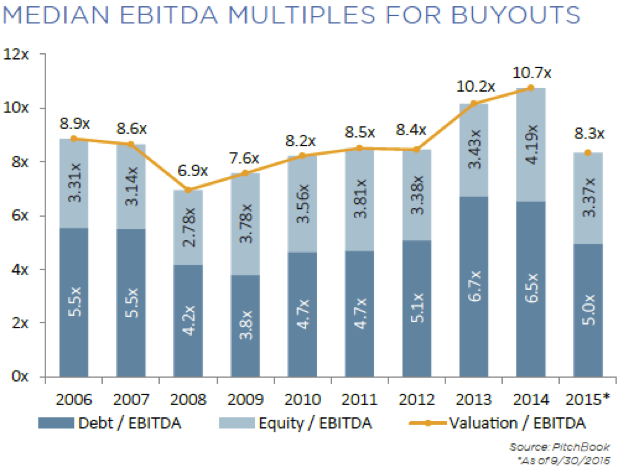 The PE industry’s usage of debt correlates with credit market cycles, too. Even though sponsors are likely to remain active in the middle market, as volatility in lending markets persists, the types of pricey buyouts that spike median multiples are going to be seen less and less. The question is how low of a floor median leverage levels will eventually hit. The Fed increasing interest rates shouldn’t spell too much trouble, mainly because the rate of increase should be slow and steady and, moreover, has been anticipated for some time. Middle-market PE sponsors will likely continue to utilize proportions of debt similar to what we’ve seen for the first three quarters of 2015, adjusting to supply constraints, although that last is a variable factor. Non-bank arrangers are only ramping up middle-market lending, with BDCs scenting opportunity for steady yields as many banks decrease their exposure. Non-bank lenders can push terms more aggressively than banks can in order to capture new business—it’ll be interesting to see how such courting of PE firms will affect lending trends going forward.
To Download PitchBook’s 3Q 2015 Global PE Deal Multiples & Trends Report, please click here.

Contact: Garrett Black
garrett.black@pitchbook.com


Latest news

PIK Your Next Adventure
Every amended PIK loan hits the same crossroad. Not everyone ends up at the same destination.
Top 50 BDCs Accounted for 75% of Nonaccrual Loan Cost in Q2’26
The 50 largest BDCs, on the basis of total debt investments as of the second quarter of 2026, accounted for 75% of the total aggregate reported value of nonaccrual debt at cost and fair value.
Private Credit Defaults 101: Beyond the Noise
Like any good school year, this series went by fast. As class comes to an end, there’s one theme that’s been top of mind here at The Lead: “noise.”