



Download PitchBook’s Report here.
Club deals are something of a sticky issue in the private equity world. PE firms themselves don’t mind them—the risk is spread around—nor do lenders mind them, who also presume less risk with more reputable investors involved. Dry powders levels have skyrocketed, and club deals allow large checks to be written to spend down capital. That said, club deals have been associated with high-profile bankruptcies in recent years. Toys R Us and TXU come to mind, leaving aside the question of whether they would have survived with only one sponsor involved. According to our latest analyst note, club-sponsored buyouts are much less likely to go bankrupt compared to sole-sponsored LBOs. 7.2% of club deals go kaput versus 14.5% of single-sponsored deals. At the same time, club deals are also deemed less competitive, or at least they once were. The DOJ’s Antitrust Division investigated a number of high-profile club deals a decade ago, alleging bid rigging. Among the deals investigated were TXU, which went bankrupt following the collapse of natural gas prices, and Hospital Corporation of America, which turned out hugely profitable and helped spur PE’s rush to buy hospital chains. In other words, club deals have been criticized for being uncompetitive (nothing really came of the DOJ investigations, by the way) while simultaneously being associated with bankruptcies. Both perceptions stuck, which helped push down the number of club deals made in recent years.
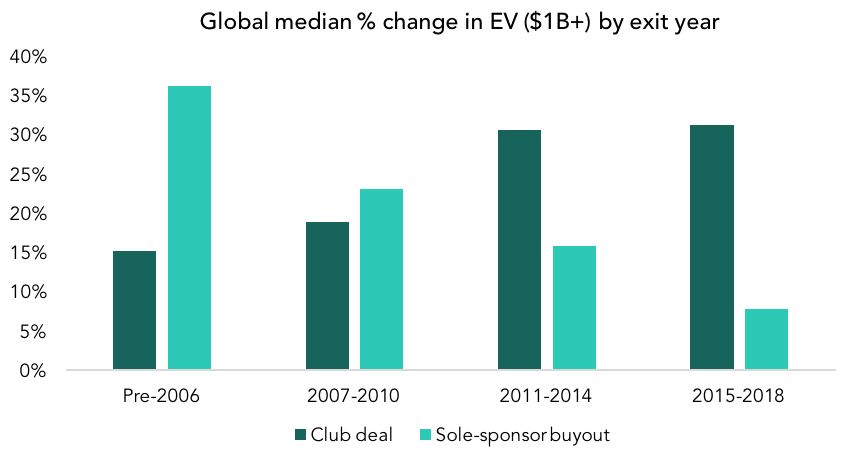
Between 2000 and 2008, close to 40% of all US non-add-on LBOs were classified as consortiums, a percentage that has plunged to only 20% today. One major difference between the timeframes is the nature of the companies themselves, most of which are publicly traded pre-buyout. Share prices leave little room for error today, which also explains the dearth of take-privates more generally. But dry powders are back to boom-era levels, with the added ingredient of much cheaper debt this time around. There’s some evidence that club deals are not only safer (in avoiding bankruptcy, at least) but also perform better than sole-sponsored LBOs. Exit EVs for $1B+ club deals have risen faster than sole-sponsored deals of the same size in the same timeframes. On top of that, club deals undergo significantly more recaps under PE ownership, including dividends. More cooks in the kitchen mean more mouths to feed. In a way, critics of club deals can have it both ways, since dividends do load more debt onto those companies while enriching their backers. The fact remains, however: club deals go bankrupt less often despite the fact that each fund involved has different exit timelines to worry about. One has to wonder if they’ll make a comeback, just as mega-funds have.
Contact: Alex Lykken
alex.lykken@pitchbook.com


Latest news

Share of PE middle-market deal count by backing type
Add-ons remain the workhorse for middle-market deployment, accounting for 67. 1% of all middle-market transactions YTD, in line with activity seen in recent years.

Software deal share falls in middle markets, rises in large caps
In Q3’26 software’s share of total deals fell in both the Lower Middle Market (to 7%) and Upper Middle Market (to 9%), while Large Cap saw a modest uptick in share to 8%.

Secondary loan prices stabilize following steep declines
Secondary loan prices came under significant pressure through September and October, with the Bloomberg U.S. Leveraged Loan Index declining 119…