



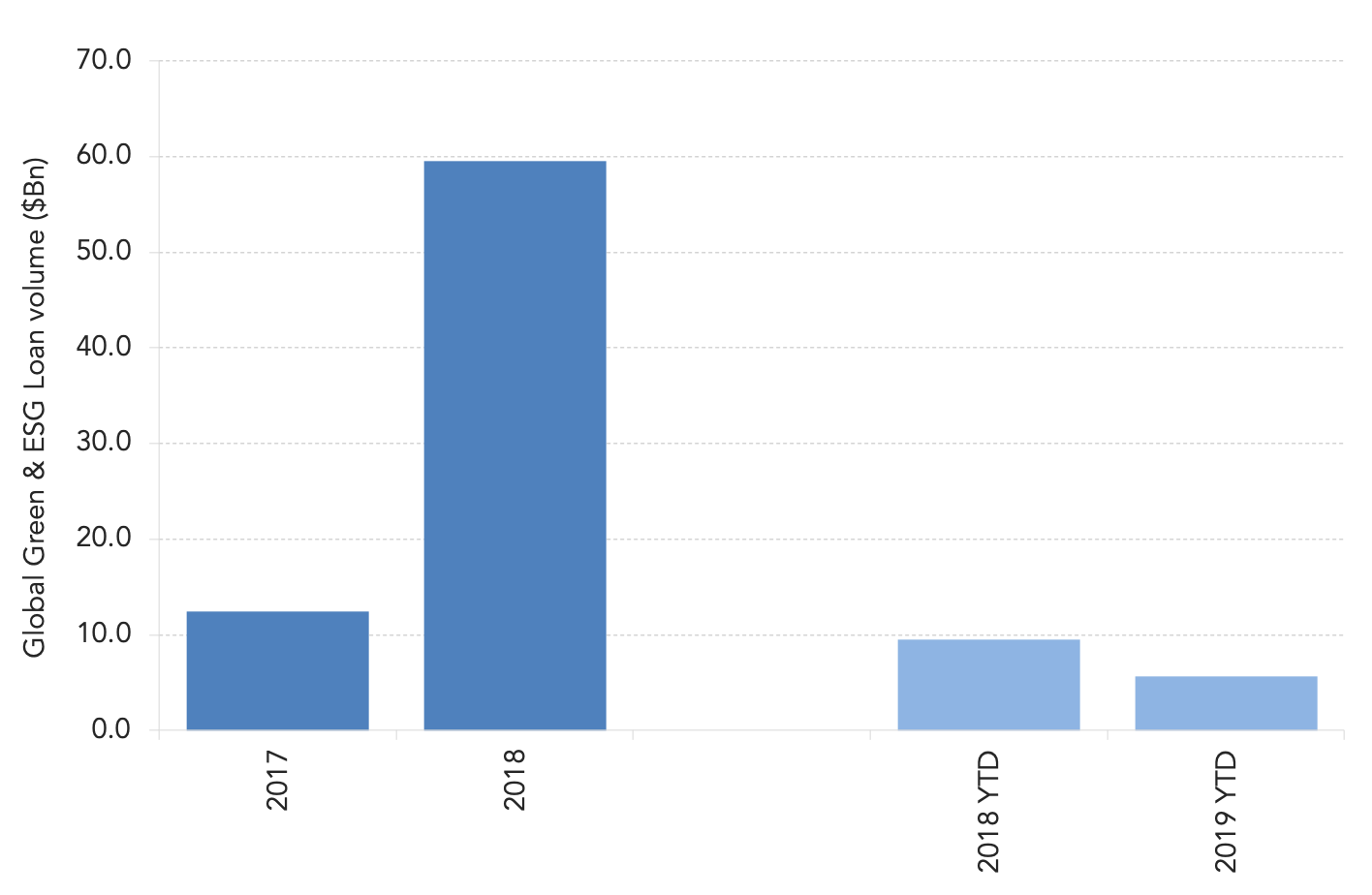
Barely five weeks into the new year, nearly US$6bn in green and ESG loan financings have worked their way through the global market. At first glance it may not seem impressive given the nearly US$9.5bn that was raised the same time last year, but green credit structures continue to gain traction. The Europe, Middle East and Africa (EMEA) region has cleared over US$5bn of green and ESG loan volume so far this year, a 42% drop compared to year ago period when the calendar was boosted by nearly US$6bn in sustainable loan facilities for Iberdrola. In the Americas, in mid-January, California-based real estate group, Prologis upsized its global line of credit by US$500m to US$3.5bn, incorporating environmental, social and governance based metrics in the calculation of spreads in the process. In a practical application of ESG linked structural benefits, at the end of January, Red Electrica de Espana (REE) saw spreads on its Euro 800m revolver from December 2017 trimmed on the back of receiving a higher rating from sustainability assessment agency, Vigeo Eiris. Although the industry as a whole, is still defining qualitative and quantitative metrics, there is political and strategic support for growing the market. Warehouses De Pauw recently structured a Euro 75m ESG bilateral revolver which backs green building projects under the company’s Green financing framework which lists opportunities to support low carbon and sustainable grow initiatives.
Contact: Maria Dikeos
maria.dikeos@thomsonreuters.com






Private Credit Defaults 101: Back to School
As Labor Day approaches, the unofficial end of summer is upon us. But, before we get too sad, there is also the familiar back-to-school energy.