



GPs’ documentation practices play an outsized role in private credit, and LPs should know whether they’re doing it well.
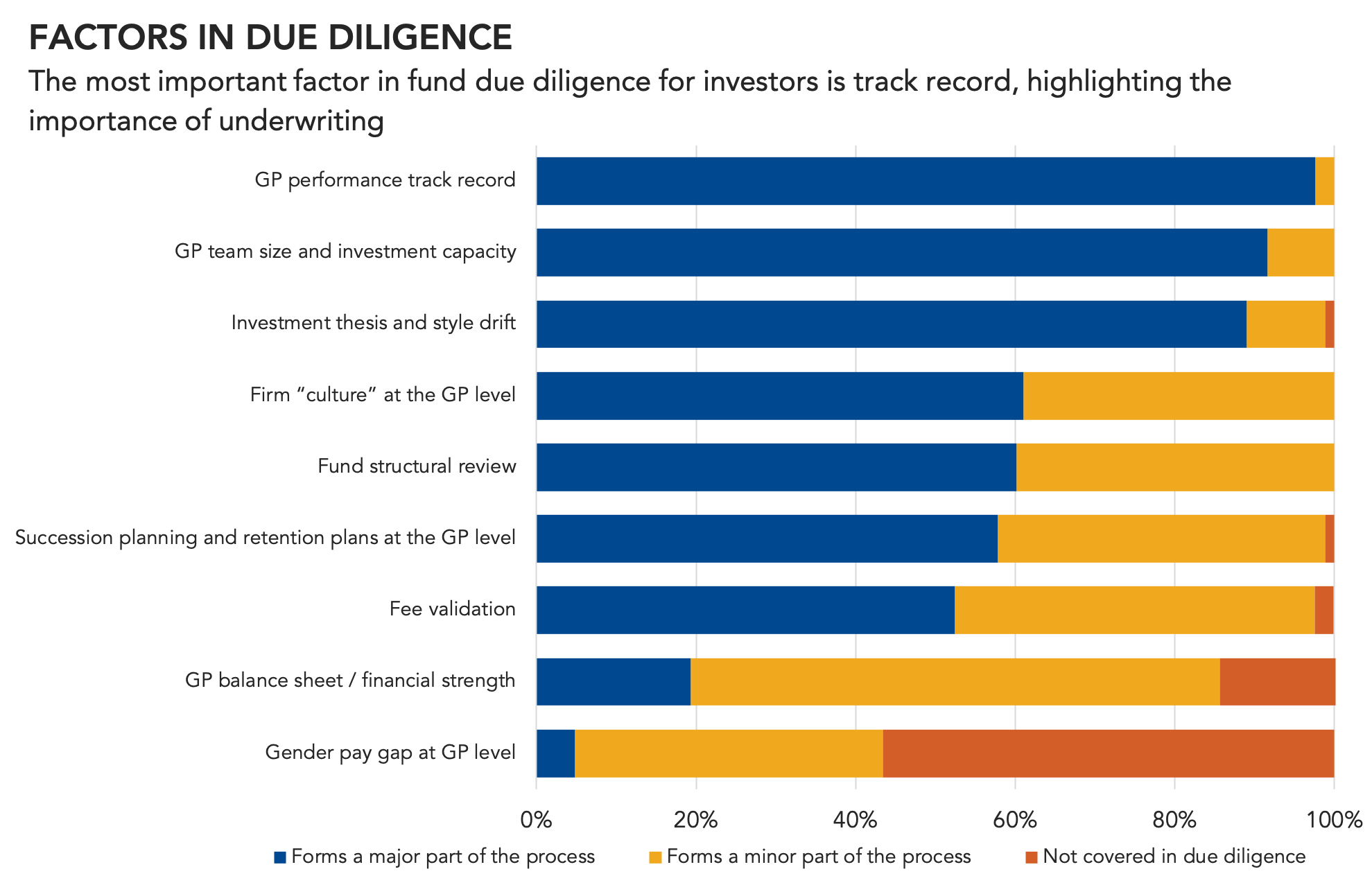
Limited partners put an almost unanimous emphasis on a potential general partner’s track record, with 97.6 percent of respondents in our annual PDI Perspectives 2019 investor survey saying it forms a major part of the due diligence process when examining potential funds in which to invest.
Investors have told Private Debt Investor that this is particularly true in private credit – an asset class in which decisions by an individual manager (the firm’s underwriting standards, for example) arguably play an outsized role in performance compared to other alternative asset classes.
Many investors approach private debt as an area that has the potential to be a great complement to fixed-income investments, and in some cases a replacement for that allocation. Of course, the caveat that goes unsaid is the assumption that an alternative lender manages its assets prudently.
Documentation plays a larger role in lending, in large part because it will dictate recoveries made in a bankruptcy or workout scenario, whereas the equity will almost always be wiped out. So limited partners must be cognisant of the importance that underwriting plays and be able to separate the good from the bad.
Credit managers can theoretically assert that their deals have financial maintenance covenants, but if the leverage covenant limits leverage at 9x EBITDA, does the deal effectively have a covenant? The seeds are being sown now that will be reaped in the next downturn. With direct lending still at the forefront of LPs’ minds, it’s critical to understand the ins and outs of a credit manager’s track record.






Private Credit Defaults 101: Back to School
As Labor Day approaches, the unofficial end of summer is upon us. But, before we get too sad, there is also the familiar back-to-school energy.