



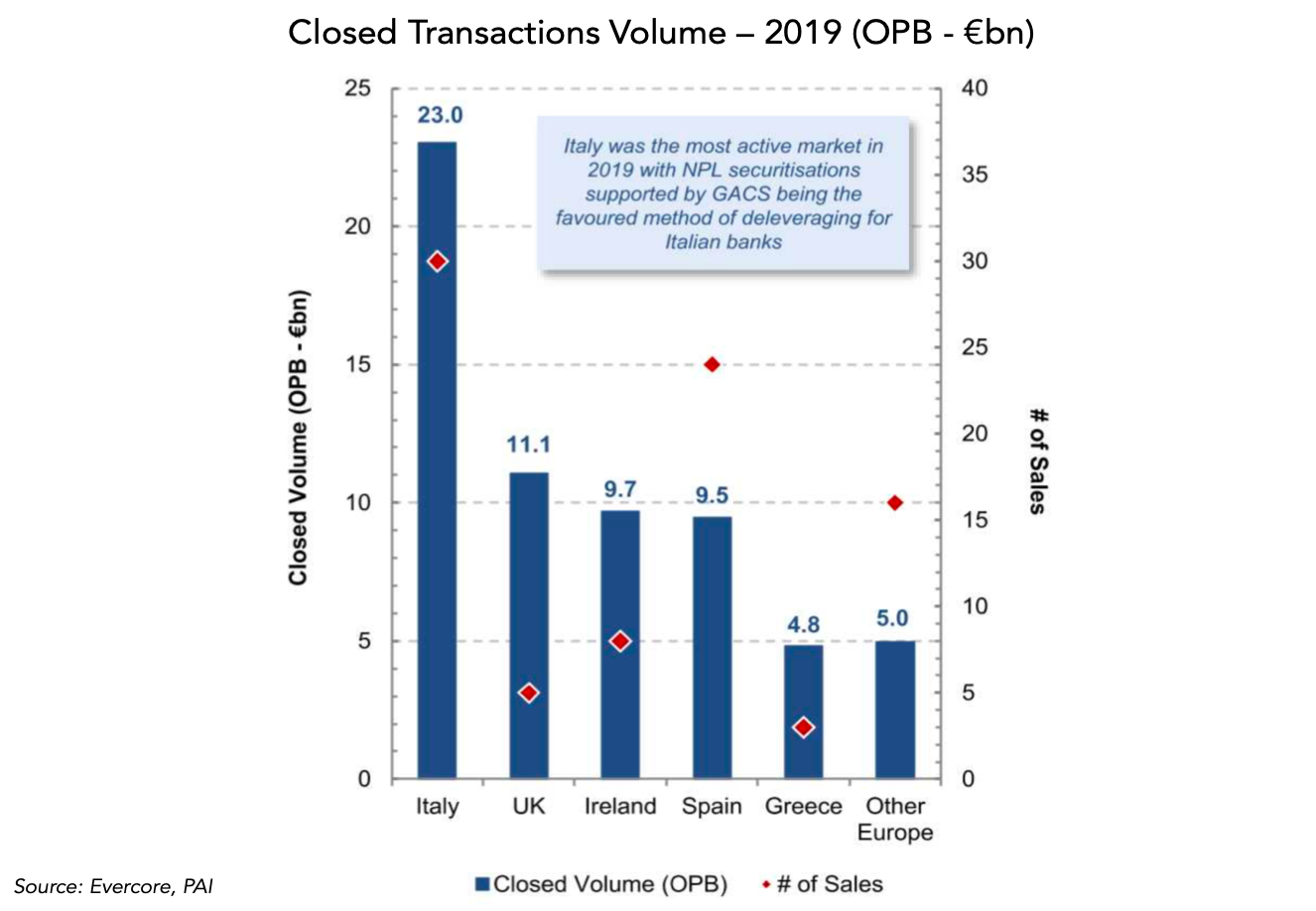
One of the long-term impacts of the global financial crisis was a sharp uptick in non-performing loans as lax underwriting standards prior to the crisis and the global recession that followed created a perfect storm where over-levered borrowers were unable to repay their debts.
While this was bad for banks, which were forced to clean up their balance sheets by regulators and sell off their large NPL books, it provided huge opportunities for private markets investors specialised in buying NPLs.
Now many are looking at whether the coronavirus crisis could create a similar opportunity for investors to acquire discounted loan books.
Initial research suggests that the crisis will once again see banks’ NPL books grow after more than a decade of working to reduce their exposure.
However, increases in NPLs are likely to be highly geographically varied depending on both the severity of coronavirus outbreaks and the way governments respond.
One source told us: “We see requests for forbearance on the US mortgage book but a lot of these are fishing expeditions and actually there’s been very little deterioration in cashflow.”
However, even within the US this can vary, with more acute problems in New York, which has seen the most coronavirus cases and deaths in North America.
“In Europe it’s very regional with Italy, Greece and Cyprus quite badly hit but other countries are within the range of normal variance.”
In Europe especially, NPL disposals by banks have been largely driven by regulation intended to improve bank capitalisation. However, regulators are already taking a proactive approach to ensure banks are more able to deal with the current crisis.
The European Central Bank has issued guidance for banks saying it will take a flexible approach regarding classification of obligators as unlikely to pay. It will also extend preferential treatment to publicly guaranteed loans made as part of governments’ responses to the coronavirus crisis.





Latest news

Rate hike expectations ease as term SOFR curve flattens
The CME six-month Term SOFR rate reached a recent high of 3.979% on July 28 before retreating to 3.837% as…
3Q26: New loan assets rise to 44% of total lending, a 3-year high
New loan assets as a proportion of total US loan volume make up 44% of the 3Q26 pipeline to date,…

North American GPs dominant as fundraising accelerates
Our PEI Private Credit 200 ranking also shows capital raising increasing overall – and accelerating especially fast for the largest…