



Covid came along and changed everything. It may also change investor views of unconventional strategies.
With covid-19 having upset the applecart in so many different ways, managers representing strategies outside of the mainstream – often referred to as “specialty finance” – might be hoping that investors are now more inclined to take an open-minded view and evolve their portfolios beyond the more obvious investment choices.
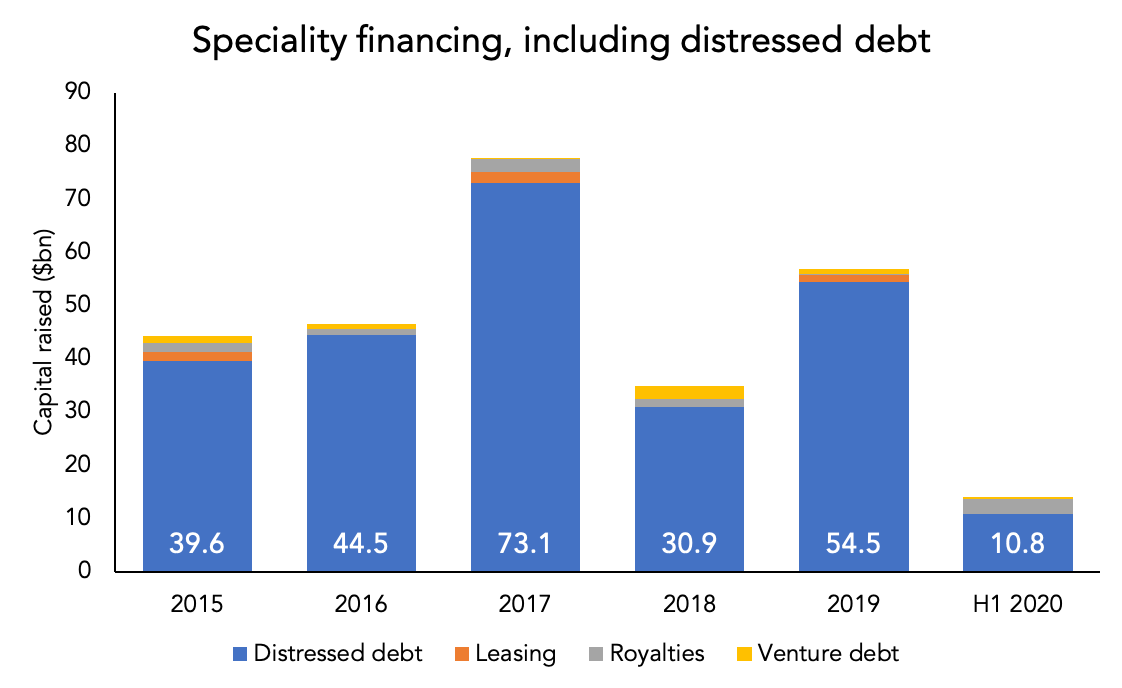
If we look at the evidence provided by global private debt fundraising in recent years (see chart above), there are few signs yet that specialty finance is gaining traction. Relative to distressed debt, it can quickly be observed that the likes of leasing, royalties and venture debt are still on the periphery when it comes to portfolio construction.
However, fundraising data is one thing – conversations with industry sources about what is happening on the ground may be another. Anecdotally, we hear of increasing LP interest in less celebrated strategies. Moreover, this interest is coming not just from the usual suspects such as endowments and families – traditionally comfortable with risk – but also from more conservative institutional investors.
There are reasons why such a shift would be taking place. In the music royalties space, the absence of live music in the covid era means artists are looking to sell back catalogues to raise money. It may be more of an income rather than a traditional credit play, but who cares about semantics if the opportunity set is compelling? There is also renewed interest in anything where collateral offers downside protection – think asset-based lending and sale & leaseback transactions, for example.
One potential stumbling block is whether organisations may need to amend their investing guidelines to incorporate new strategies into the portfolio. Furthermore, there is the question of whether this can justifiably be done in a world where it’s either difficult or impossible to physically meet with managers. Reconfiguring a portfolio is a challenge in normal times, never mind in today’s ‘remote’ era.





Latest news

Rate hike expectations ease as term SOFR curve flattens
The CME six-month Term SOFR rate reached a recent high of 3.979% on July 28 before retreating to 3.837% as…

3Q26: New loan assets rise to 44% of total lending, a 3-year high
New loan assets as a proportion of total US loan volume make up 44% of the 3Q26 pipeline to date,…

North American GPs dominant as fundraising accelerates
Our PEI Private Credit 200 ranking also shows capital raising increasing overall – and accelerating especially fast for the largest…