
Download PitchBook’s Report here.
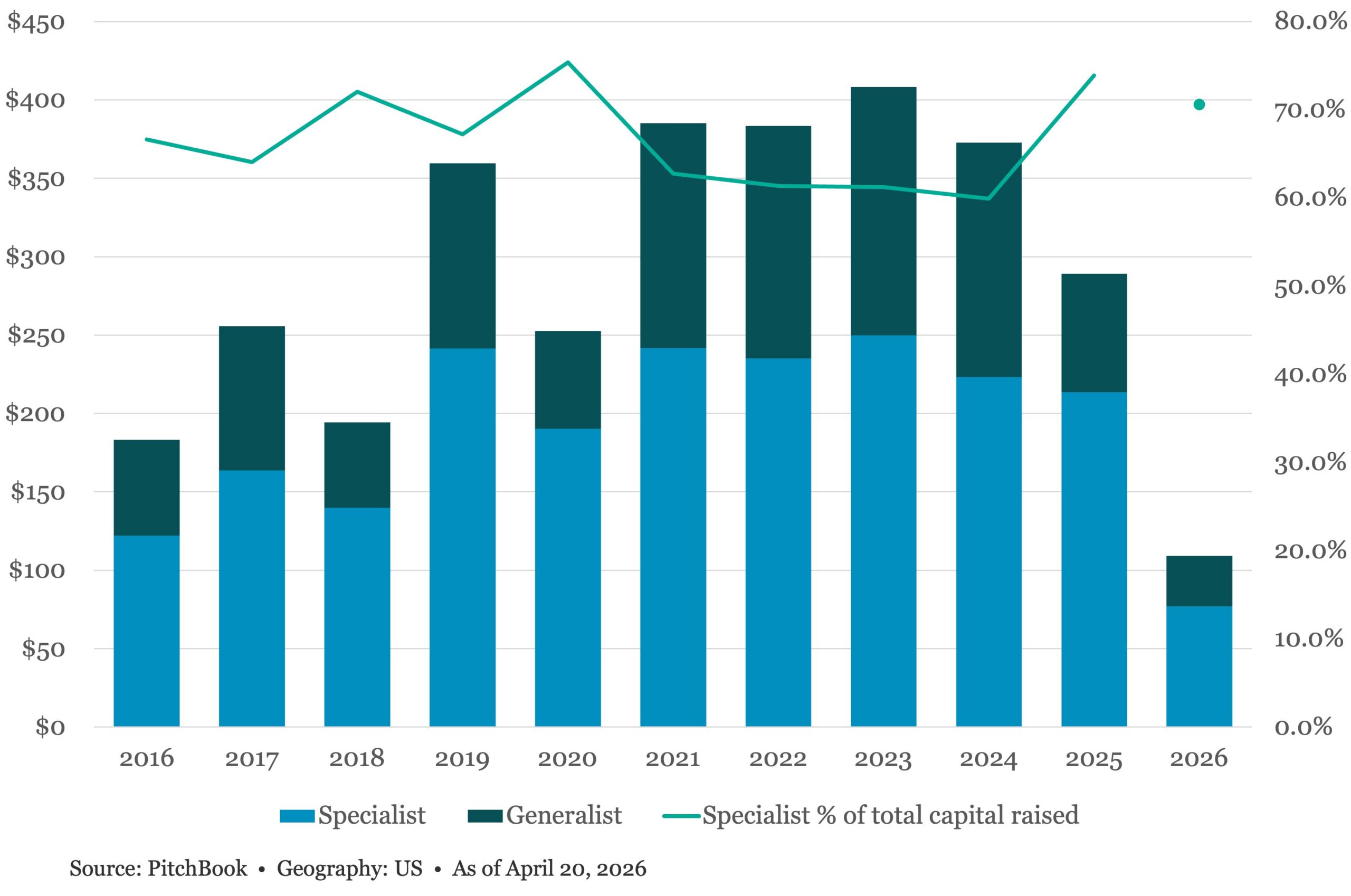
Fundraising consolidation is here to stay, and it will change the way managers go about raising new funds in the coming years. The PE fundraising landscape has undergone a structural shift that goes well beyond the cyclical headwinds of rising interest rates and muted exit activity. The majority of fundraising allocations now flow through re-ups to successor funds raised by managers with established LP relationships. New manager relationships are being initiated only where there is a genuinely compelling and differentiated case. The practical consequence is that the middle-market GPs—established but not elite managers running funds in the $1 billion to $5 billion range—are being squeezed from both sides, facing competition from megafunds with institutional relationships on one end and nimble specialist funds with genuine niche differentiation on the other. In 2025, specialist managers accounted for 73.9% of all capital raised, significantly above the five-year average of 64. 1%. This is, in a sense, the beginning of the end for generalist PE funds.
(Past performance is no guarantee of future results.)

Latest news

US leveraged loan launches reach five-month high in September
The US leveraged loan market recorded $93.6b of launches in September, marking the busiest month of primary market activity since…

Information technology topped nonaccruals on a cost basis
The information technology sector moved from second place in the first quarter to the top of the list in the second quarter